
Terminal Operations
LPG terminal and filling plant automation: what is automated and where each system stops
What gets automated at an LPG terminal or filling plant, from receipt and pressurised storage to bulk loading, cylinder filling, weighing, gas detection and ESD, and how the TAS, TMS, weighbridge and SIS divide the work.
- Topic
- Terminal Operations
- Updated
- 18 November 2026
- Reading time
- 9 min
- Sections
- 8
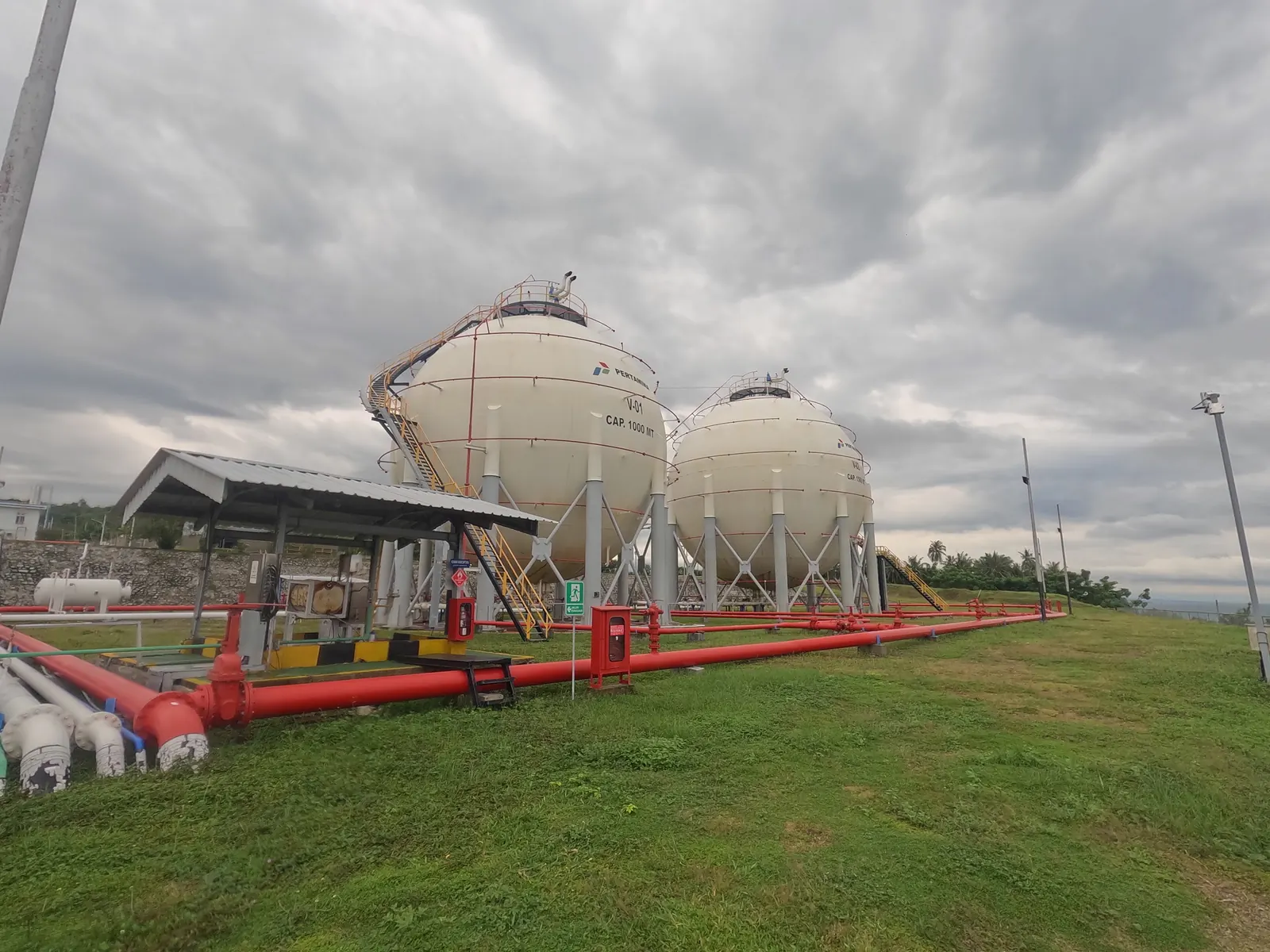
LPG terminal automation is the set of instruments, controllers and software that receive, store, load, fill and weigh liquefied petroleum gas under pressure, record every transaction, and shut the plant down safely when gas escapes. It applies to import and coastal terminals, depots and the bulk LPG filling stations known in Indonesia as SPBE or SPPBE (Stasiun Pengisian dan Pengangkutan Bulk Elpiji).
The software side looks familiar to anyone who knows the terminal automation system (TAS) of a fuel terminal: orders, gate checks, loading authorisation and delivery documents. The plant side is different. LPG stays liquid only because it is kept under pressure, its vapour is heavier than air and settles in low places, and the product is sold by weight. Those facts change the instruments, the safety design and the way quantities are proved.
This guide walks through each area of an LPG site, shows where the TAS, the tank management system (TMS), the weighbridge and the safety instrumented system (SIS) each stop, and lists what to prepare before a project starts.
Overview
What is automated at an LPG terminal
Six areas carry most of the automation at an LPG terminal or filling plant, and each has its own control logic and its own records. Product arrives by ship at a jetty or island berth, or by pipeline. It is stored in spheres or horizontal bullets. It leaves either in bulk road tankers (skid tanks) or in cylinders filled on a carousel line. Weighing proves the quantity at the gate and on the filling line, while gas detection and ESD watch over all of it.
The diagram follows that path and shows which layer each step sits in. Field devices are the meters, scales, transmitters and valves. The control layer is the PLC, the filling line controllers and the SIS. The application layer holds the TAS, the TMS and the weighing software, and the enterprise layer is SAP or the owner's ERP. Tap a node to read what it does.
Unloading arms, receipt meters and pressure readings, often read by an RTU at an island berth.
Hover, focus or tap a step to read its note.Receipt and pressurised storage
Receipt and storage are automated so that operators know, at every moment, how much LPG is in each vessel and whether any vessel is close to its limits. At a marine terminal the unloading arms, receipt meters and line pressures are often far from the control room, so an RTU collects them and passes them to SCADA, as Citia's island berth bulletin describes for LPG and fuel unloading.
Each sphere or bullet carries a level gauge, pressure and temperature transmitters and an independent high-level alarm that does not share a sensor with the gauge. Level gauges on pressurised vessels sit inside the same international framework as those on atmospheric tanks. OIML R 85 explicitly covers spheres, spheroids and bullets, and API MPMS Chapter 3.3 covers automatic tank gauges on stationary pressurised tanks used in custody transfer. A pressurised vessel has no vapour space open to air, so the TMS also has to account for the product held as vapour above the liquid when it computes mass.
Remote-operated isolation valves on the vessel outlets are the other half of storage automation. They let the SIS or an operator isolate a vessel without walking into a leak. Pressure and temperature data only help if they reach the PLC and HMI reliably. At LPG Priok, Citia installed and integrated pressure and temperature transmitters in areas PMB III and IV, with calibration, loop checks and commissioning done while the terminal kept operating. The layout and construction of the storage itself follow codes such as API Standard 2510, which covers the design, construction and location of LPG storage installations and handling facilities, and NFPA 58, the Liquefied Petroleum Gas Code.
Bulk truck loading
A bulk LPG loading bay automates the same sequence as a fuel bay, with two additions: a vapour return line and a stronger dependence on weight. The TAS checks the truck and its order at the gate, assigns a bay and releases loading only when the permissives are healthy. Typical permissives are the earth connection to the tanker (see static grounding during loading), the loading arm in position, the vapour return valve open and no active gas alarm in the bay.
Quantity is proved in one of two ways. Many LPG depots weigh the truck empty on entry and full on exit, and the net mass becomes the delivered quantity. Others use a mass flow meter with a batch controller at the bay and keep the weighbridge as a check. OIML R 117-1:2019 places measuring systems for liquefied gases under pressure, measured at -10 °C or above, in accuracy class 1.0, which allows 1.0 % on the complete system, against 0.5 % for most liquid fuel systems. The wider band reflects how hard it is to meter a liquid close to its boiling point.
Where the weighbridge decides the quantity, its link to the TAS matters as much as the scale. During Citia's long-term support at the LPG Panjang depot, the most frequent fault was lost communication between the weighbridge controller and the Weighing House PC, which held up weighing until the physical connection, the communication card, the cable and the device settings were checked. A weighing system such as INTEGRA Weighing pairs weigh-in and weigh-out by truck and order, so a lost reading shows up as an open transaction instead of disappearing.
- Quantity basis
- Net mass from weigh-in and weigh-out, or a mass meter at the bay
- Accuracy class for LPG metering
- 1.0 (OIML R 117-1:2019, liquefied gas at -10 °C or above)
- Tera ulang, electronic weighbridge
- 1 year (Permendag 24/2024, Lampiran I)
- Tera ulang, mass flow meter
- 10 years (Permendag 24/2024, Lampiran I)
- Typical permissives
- Earth connection, arm position, vapour return open, no gas alarm
Cylinder filling lines
A cylinder filling line is automated to put the right net mass of LPG into every cylinder and to keep leaking or mis-filled cylinders inside the plant. Empty cylinders arrive on a conveyor, are inspected and are fed onto a filling carousel. Each filling head sits on its own electronic scale, which reads the cylinder's tare and closes the filling valve when the target net mass is reached.
Downstream of the carousel a check scale weighs every cylinder again and diverts any that fall outside the set tolerance. A leak test follows, at the valve and often on the cylinder body, and then the valve is capped or sealed. Rejected cylinders go to a separate line for emptying or correction. The line controller keeps a count of good and rejected cylinders, and those counts are what reconcile against the bulk LPG drawn from storage.
The legal frame makes this more than a quality question. Permen ESDM 26/2009 on LPG supply and distribution requires LPG trading licence holders to guarantee the correct fill weight for the cylinder size all the way to the consumer (Pasal 15 huruf d), and to take responsibility for the accuracy of their measuring systems (Bab VIII). Permendag 24/2024 lists check and sorting weighers and electronic scales with a 1-year tera ulang interval, so ask the metrology authority which scales on your line it treats as legal instruments.
On the bulk side of a filling plant the paperwork can be automated too. Citia's FPL Admin system prints each LPG filling form (FPL) with a single-use barcode; scanning it at the filling shed carries over the related data, and the system keeps seal reports that can be filtered by date and customer.
Intake and inspection
Empty cylinders are checked for damage, test date and valve condition before filling.
Tare and fill on the carousel
The scale under each head reads the tare and stops the fill at the target net mass.
Check weighing
A check scale weighs every filled cylinder and diverts over- or under-filled ones.
Leak test
Valve and body are tested; leaking cylinders leave the line for correction.
Seal and count
Valves are capped or sealed and the line controller records good and rejected counts.
Gas detection and ESD interlocks
Gas detection and ESD exist to find an LPG release early and to isolate it before it reaches an ignition source. LPG vapour is heavier than air, so it spreads along the ground and collects in drains, pits and low corners. Detectors therefore go low and close to likely leak points such as pump seals, loading arms, the filling carousel, cylinder storage and drains. IEC 60079-29-2 covers the selection, installation, use and maintenance of flammable gas detectors.
The detectors feed a fire and gas system, and confirmed alarms feed the SIS. The SIS is a separate controller designed and maintained under IEC 61511. It closes the ESD valves on the vessel outlets, stops pumps and compressors, stops the filling carousel and halts loading in the affected bays. Which alarm triggers which action is set in a cause and effect matrix that comes out of the site's hazard study, often with a layer of protection analysis. The table below shows the shape of such a matrix; the real one must come from your own study. For the design side, see ESD, SIS and interlocks and the fire and gas system guide.
Electrical equipment in these areas also has to suit the hazardous area classification, and the hazardous area guide explains zones and protection types.
| Criterion | Typical automatic action | Who decides it |
|---|---|---|
| Confirmed gas at the filling hall | Stop the carousel, close the LPG supply valve to the hall, alarm the control room | Cause and effect matrix from the site hazard study |
| Confirmed gas at a loading bay | Close the bay valves, stop the loading pump, block new loading authorisations | Same matrix; the TAS only reads the status |
| Fire detected near a sphere | Close the sphere outlet ESD valves, stop transfer pumps, start the fire water system | Hazard study and fire protection design |
| High-high level in a vessel | Close the receipt valve to that vessel and stop the incoming transfer | Overfill protection design, independent of the gauge |
| Manual ESD push button | Site or area shutdown as defined in the matrix | Operating philosophy agreed with operations |
Where TAS, TMS, weighbridge and SIS stop
Each system on an LPG site should own one kind of decision, and the interfaces between them should carry data only, so that no system can override another. The TAS owns the transaction. The TMS owns tank stock. The weighbridge and the filling scales own the legal mass. The SIS owns the trips and does not depend on the TAS network to act. The comparison of TAS vs TMS vs TPS explains the TAS and TMS split for fuel terminals; LPG adds the filling line and the weighing system as separate owners.
Blurred boundaries cause the classic integration problems. A TAS that calculates net mass from raw scale counts, instead of reading the certified weight from the weighing controller, turns the TAS into part of a legal instrument. A loading permissive that runs through the TAS server stops loading every time the network drops, and a trip that waits for a software acknowledgement is no longer a safety function. Write the owner of each signal into the interface list before the design is frozen.
| Criterion | Owns | Hands data to | If the network fails |
|---|---|---|---|
| TAS | Orders, gate, queue, loading authorisation, documents | SAP or ERP; bay controllers | Bays finish the batch already released; no new authorisations |
| TMS with ATG | Level, pressure, temperature, tank stock, tank tickets | SAP physical inventory; TAS for availability | Gauges keep measuring; history resumes when the link returns |
| Weighbridge and weighing software | Gross, tare and net mass per truck, weigh ticket | TAS and SAP | Weighing continues locally; tickets sync later |
| Filling line control | Per-cylinder fill, check weighing, rejects, counts | Plant reporting and TAS | Line runs on its own controller |
| SIS and fire and gas | Gas and fire detection, ESD trips, valve closure | Status only, to SCADA and TAS | Acts with no dependence on any network |
From Citia's LPG work
Most of the work at running LPG sites is keeping integrated systems available, and the records from Citia's LPG projects show where the effort goes.
- At the LPG Panjang depot (2022), Citia's long-term service agreement covered the TAS software (FD-Flow and CSL), SCADA, the TAS server, the Weighing House PC and the NFC tapping card readers, with a standby technician during office hours and on-call support after hours.
- At the Pulau Layang terminal, the ongoing support covers distribution, receipt and storage software, SCADA, electrical systems and safety equipment including motor-operated valves and ESD valves. The project note on the Pulau Layang LPG terminal records that the TAS reports physical tank stock to SAP and generates every document from tank ticket to delivery note.
- At LPG Priok (2025), pressure and temperature transmitters were installed, calibrated and integrated with the PLC and HMI in a limited work area, with the schedule set around field operations.
- The grounding assessment at Balongan found a filling shed grounding module dead and past its service life, a reminder that a loading permissive is only as good as the device behind it.
The shared lesson is to trace every fault to its root cause and record the evidence, because equipment outside a contract's scope often stops a TAS that is itself healthy. The INTEGRA TAS and INTEGRA TMS product pages describe the software that sits on top of this field work.
What to prepare before an LPG automation project
Preparation decides most of the schedule. A contractor can only quote and design what the owner can describe, and LPG sites have more interfaces per bay than fuel terminals. Start with the documents: P&IDs, the cause and effect matrix, hazardous area drawings and the list of existing instruments with their make, model and protocol.
Then collect the measurement status. List every weighbridge, filling scale, check scale, meter and tank gauge, with its latest tera certificate and the date it falls due. The guide to tera and tera ulang explains who does the work, and the article on tank gauging accuracy and its legal frame covers tank measurement in more depth.
Finally, agree how the new system will be proven and switched over. IEC 62381 describes factory, site and integration acceptance tests for process automation. Plan the cutover bay by bay and line by line, so that LPG keeps moving while each part is tested. The TAS specification and RFQ guide lists what a good specification contains.
Document set
P&IDs, cause and effect matrix, area classification, instrument list.
Boundary sheet
Owner of every signal: TAS, TMS, weighing, filling line or SIS.
Measurement status
Tera certificates and due dates for scales, meters and gauges.
Enterprise interface
Order, stock and posting messages agreed with the SAP or ERP team.
Test and cutover plan
FAT, SAT and SIT scope, then a bay-by-bay switchover with operations.
Terms used in this guide
- SPBE / SPPBE
- Stasiun Pengisian Bulk Elpiji and Stasiun Pengisian dan Pengangkutan Bulk Elpiji: Indonesian bulk LPG stations that fill cylinders.
- Bullet
- Horizontal cylindrical pressure vessel for LPG storage.
- Sphere
- Spherical pressure vessel used for larger LPG volumes.
- Skid tank
- Road tanker that carries LPG in bulk under pressure.
- Check weigher
- Scale after the filling carousel that re-weighs each cylinder and rejects those outside tolerance.
- ESD valve
- Remotely closed isolation valve operated by the safety system.
- SIS
- Safety instrumented system: a separate controller that carries out safety trips.
- Cause and effect matrix
- Table that links each alarm or detector to the automatic actions it triggers.
Frequently asked questions
What is automated at an LPG filling plant (SPPBE)?
An SPPBE automates bulk receipt and storage, the cylinder filling carousel with its filling scales, check weighing, leak testing, sealing and the dispatch records. Gas detection and an ESD system run alongside and can stop the line on a confirmed release.
How is a TAS at an LPG terminal different from one at a fuel terminal?
The transaction logic is the same, but an LPG TAS relies more on weight and on vapour return and gas permissives. Quantities usually come from a weighbridge or a mass meter, and the TAS should read them from the certified device instead of calculating them itself.
Should the ESD system be connected to the TAS?
The ESD system should send its status to the TAS and SCADA, but it must act without them. The TAS uses the status to block new loading authorisations; the trip itself runs in the SIS under IEC 61511.
Do LPG spheres need tera in Indonesia?
Fixed spherical tanks used to determine quantities fall under legal metrology, and Permendag 24/2024 sets a 12-year tera ulang interval for them. Confirm the status of your vessels with the UPT or UML that serves the site.
Where should gas detectors be placed at an LPG site?
Gas detectors for LPG go low and close to likely leak points, because LPG vapour is heavier than air. Typical points are pump seals, loading arms, the filling carousel, cylinder storage and drains; IEC 60079-29-2 gives the selection and installation guidance.
What should we prepare before asking for an LPG automation quote?
Prepare the P&IDs, the cause and effect matrix, hazardous area drawings, the instrument list, the tera status of every scale and meter, and the enterprise interfaces you need. A one-page boundary sheet that names the owner of each signal speeds up both the quote and the design.
Sources and further reading
- Permen ESDM No. 26 Tahun 2009 tentang Penyediaan dan Pendistribusian Liquefied Petroleum Gas (opens in a new tab)
- Peraturan Menteri Perdagangan Nomor 24 Tahun 2024 tentang Kegiatan Tera dan Tera Ulang Alat Ukur, Alat Takar, Alat Timbang, dan Alat Perlengkapan Metrologi Legal (opens in a new tab)
- OIML R 117-1:2019 Dynamic measuring systems for liquids other than water, Part 1 (opens in a new tab)
- OIML R 85-1 & 2: Automatic level gauges for measuring the level of liquid in stationary storage tanks (opens in a new tab)
- Petroleum Measurement catalog: MPMS Chapter 3.3, level measurement in stationary pressurized storage tanks by ATG (opens in a new tab)
- API Standard 2510, 9th Edition: Design and Construction of LPG Installations (opens in a new tab)
- NFPA 58 Liquefied Petroleum Gas Code (opens in a new tab)
- IEC 60079-29-2:2015 Gas detectors: selection, installation, use and maintenance of detectors for flammable gases and oxygen (opens in a new tab)
- IEC 61511-1:2016 Functional safety: safety instrumented systems for the process industry sector, Part 1 (opens in a new tab)
- IEC 62381:2024 Automation systems in the process industry: FAT, SAT and SIT (opens in a new tab)
- Ditjen Migas: Bimtek dan kompetensi Katek/Wakatek SPBE/SPPBE (opens in a new tab)
- LTSA for LPG Panjang
Next step
Prepare the technical discussion for your facility.
Bring the equipment list, diagrams and symptoms you have. The Citia team helps map the next step.
Related products and solutions
- ProductINTEGRA TASRuns truck loading at fuel and LPG terminals, from order and gate-in to filling and gate-out documents.
- ProductINTEGRA WeighingPairs weigh-in and weigh-out for each truck and issues the weigh ticket.
- ProductINTEGRA TMSCollects ATG readings from every tank for live levels, history, tank tickets and stock posting to SAP.
- ProjectLTSA for LPG PanjangThe long-term service agreement (LTSA) for the TAS at LPG Panjang keeps the Terminal Automation System (TAS) reliable and available. The TAS supports LPG receipt, storage and distribution.
- ProjectPulau Layang LPG terminal: TAS maintenance under LTSATAS operations and terminal-system support
- KnowledgeTerminal Automation System (TAS): what it is, its components and how it worksA terminal automation system (TAS) runs fuel and LPG truck loading, from order and gate-in to metering, delivery documents and gate-out.
- KnowledgeESD vs SIS vs interlock, and what SIL meansEmergency shutdown (ESD) brings a process to a safe state; built to IEC 61511 with a target SIL, it becomes part of a safety instrumented system (SIS).
- KnowledgeFire and gas systems and early warning at fuel terminalsA fire and gas system detects fire and flammable gas, sounds alarms and trips the process; this guide covers detectors, logic, early warning and PAGA at fuel terminals.