
Legal metrology
Legal metrology in Indonesia: verification (tera), re-verification and calibration
Tera marks an instrument as valid for use, tera ulang repeats it periodically, and calibration gives no legal status. The rules and the process in Indonesia.
- Topic
- Legal metrology
- Updated
- 13 November 2026
- Reading time
- 3 min
- Sections
- 6
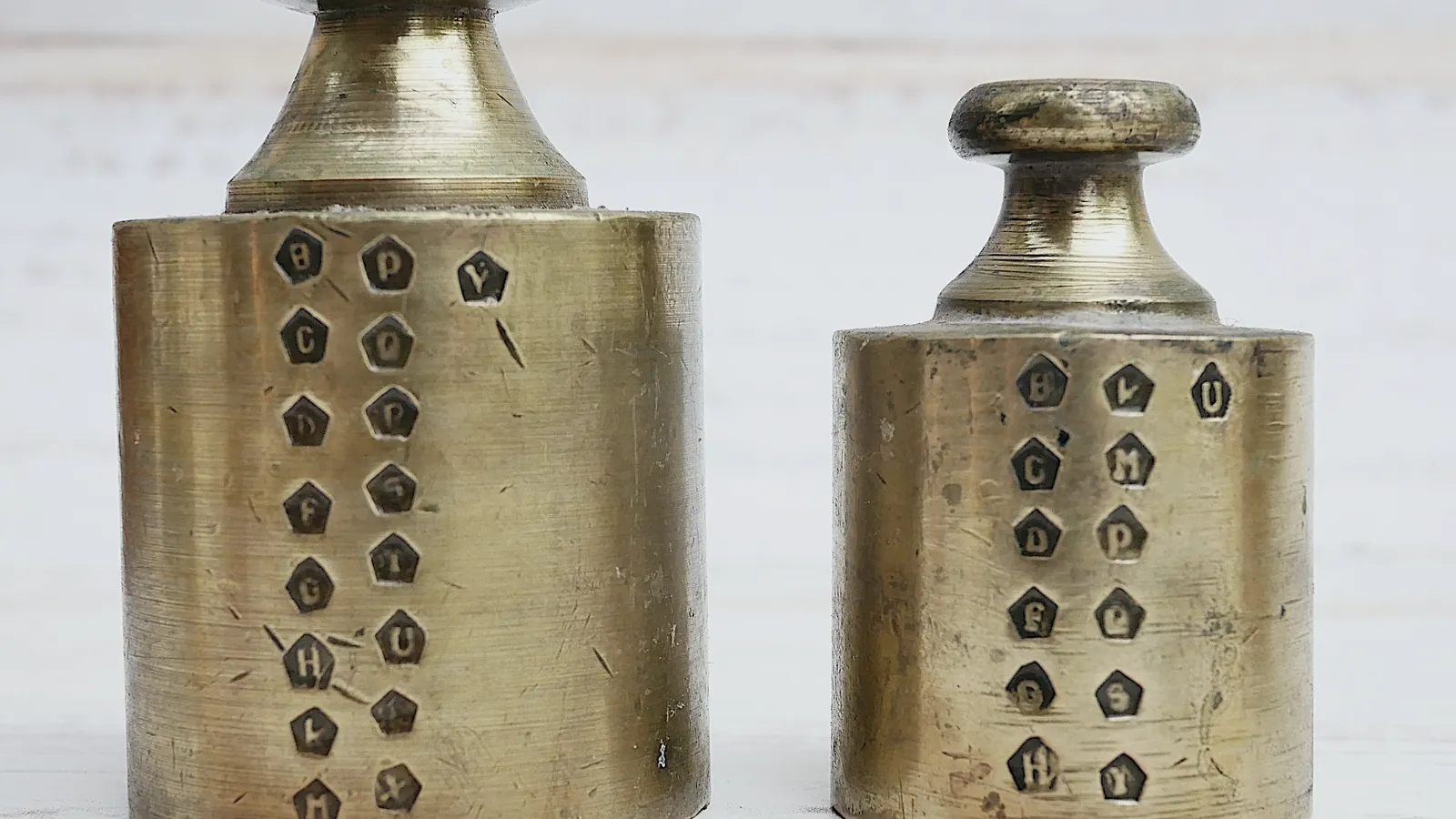
Tera is the testing and marking, by authorised legal-metrology officers, that shows a measuring, weighing or related instrument (UTTP) meets the requirements for use; tera ulang repeats it periodically, while calibration compares the instrument with a standard without giving it a legal status.
The three words are often used as if they meant the same thing, and the difference matters at audits, in contracts and when a customer disputes a quantity. This guide explains each one, what the law says, how the process runs, and where calibration still earns its place. For a worked case, see how a weighbridge works.
Comparison
Tera, tera ulang and calibration side by side
| Criterion | Tera | Tera ulang | Calibration |
|---|---|---|---|
| Who does it | Authorised officers of the Direktorat Metrologi, UPT or UML | The same officers | A calibration laboratory, often accredited by KAN, or an in-house team with traceable standards |
| Legal basis | UU 2/1981, Permendag 24/2024 | UU 2/1981, Permendag 24/2024 | Quality and contract requirements, not a metrology law |
| When | Before an instrument is first used | Periodically, and after events such as repair or a broken seal | On your own schedule, after repair, or when a contract asks |
| Output | Tanda tera sah or batal, or a written statement bearing it | Tanda tera sah or batal, with a year code | A certificate with measured errors and uncertainty |
| Gives legal status | Yes | Yes | No |
Risk
Why a site cares
An instrument without a valid mark is not only an audit finding; the law forbids using it where a quantity is decided.
Pasal 25 of UU 2/1981 prohibits having or using, at a place of business, at a place of delivery or where charges are set by measure, an instrument with a void or damaged mark, without a valid mark, with a repair that was not re-approved, or with readings outside the permitted deviation.
Pasal 27 adds that a measuring or indicating device attached to an instrument already tera'd turns it into one treated as not tera'd. When a project adds data collection or a display to a weighing or metering instrument, ask your UML first how it should be done.
Legal basis
What the law says
Indonesian legal metrology rests on a short law and a ministerial regulation that is renewed from time to time.
UU 2/1981 on Metrologi Legal defines tera as marking with a valid or void tera mark after testing an instrument that has not yet been used, and tera ulang as the periodic marking of one that has already been tera'd. Pasal 12 leaves the list of instruments that must be tera'd and re-tera'd to a government regulation, and Pasal 13 lets the minister set how and how often the work is done.
Permendag 24/2024, enacted on 4 October 2024, now carries those details. Its Pasal 4 puts the work with authorised officers of the Direktorat Metrologi, a UPT or the UML for the area.
Pasal 5 lists events that call for re-verification, such as an expired mark, a damaged mark or broken seal wire, a repair that affects the readings, or readings that deviate from the technical requirements. The mark carries a year code. The regulation refers to an interval table in its annex, so read the current text or ask your UML for the interval of your instrument.
How the rules developed
- 1981
UU 2/1981 on Metrologi Legal
Sets the idea of tera and tera ulang and the power to regulate them.
- 2018
Permendag 67, 68 and 125
Separate rules on which instruments need tera, how it is done, and the tera mark.
- October 2024
Permendag 24/2024
One regulation on tera and tera ulang; it revokes the 2018 rules and the 2014 rule on metrology staff.
- December 2024
Permendag 31/2024
Rules on legal metrology measurement standards, replacing Permendag 52/2019.
Scope
Which instruments are in scope
The law covers measuring, volume, weighing and related instruments, so the question is not whether a device is electronic but how it is used.
In a fuel business, four kinds of device come up most often. Whether a given one is on the mandatory list, and under which rule, is set by the regulation's annex and by your UML, so confirm it before assuming. The regulation also has a separate provision for equipment in oil and gas operations, which you should read for your own case.
Weighbridges
Weighing instruments used for transactions.
Fuel flowmeters
Meters that measure delivered fuel.
Storage tanks
Tanks whose volume tables are used for quantity.
Tank trucks
Compartments used to measure delivered volume.
Process
Getting tera ulang done
Check the mark
Read the year code on the tera mark and look for a broken seal wire well before it expires.
Contact your UML
Ask the regional Unit Metrologi Legal how to book, which instruments are due and what fees apply.
Prepare the instrument
Clean it, give officers access, plan for the downtime and have a person who knows the system on site.
Testing and adjustment
Officers test the instrument; minor adjustment (menjustir) can bring it within requirement.
Mark and record
A valid mark goes on, or a void mark if it fails; file the record and set the next date.
Calibration
Where calibration still matters
Calibration answers a different question from tera: how far is this instrument from a traceable reference, and has that changed.
It supports your own control, the quality system and customer contracts. The Kimia Farma boiler flow-metering project, for example, included internal calibration of the flowmeters and calibration by a KAN-accredited laboratory, besides commissioning (KF flowmeter). For flowmeters used to deliver fuel, the international reference is OIML R 117-1, and operators usually add meter proving between verifications; see flowmeters for fuel and meter proving. Keep the tera calendar and the calibration calendar side by side, because one never replaces the other.
Glossary
- UTTP
- Short for alat ukur, takar, timbang, dan perlengkapannya: measuring, volume and weighing instruments and their accessories.
- UML
- Unit Metrologi Legal, a unit under a provincial or district government that carries out tera work.
- UPT
- Unit Pelaksana Teknis, a self-contained technical unit of the Ministry of Trade.
- Tanda tera
- The mark affixed to an instrument, or to a certificate, as proof of tera or tera ulang.
- Tanda sah and tanda batal
- The valid mark for an instrument that passes, and the void mark for one that fails.
- Menjustir
- Minor adjustment or repair so the instrument meets the tera requirement.
- Traceability
- The link from a reading to a national or international standard through documented comparisons.
Frequently asked questions
What is the difference between tera, tera ulang and calibration?
Tera and tera ulang are legal markings made by authorised officers after testing, while calibration is a comparison with a standard that gives no legal status. Tera applies before first use, tera ulang repeats it periodically, and calibration follows your own schedule.
Which instruments must be re-verified (tera ulang)?
The instruments that must be tera'd and re-tera'd are those listed under the metrology regulations, and the current rule is Permendag 24/2024. In practice weighing instruments, fuel dispensers and volume meters used in transactions are the usual cases. Confirm your instrument with the regional UML.
Can a calibration certificate replace tera?
No, a calibration certificate cannot replace tera, because it does not carry a tanda tera and is not issued by authorised legal-metrology officers. Use calibration for your own control and traceability, and tera or tera ulang for legal status.
Who performs tera ulang in the regions?
Tera ulang is performed by authorised officers of the Direktorat Metrologi, a UPT, or the Unit Metrologi Legal (UML) of the provincial or district government. Which one serves you depends on your location, so start with the UML of your regency or city.
How long is a tanda tera valid?
A tanda tera is valid for the interval set for that instrument type, and the mark shows a year code. The interval table sits in the regulation's annex, so check the current text or ask your UML, then set a reminder before the year code ends.
Does a fuel flowmeter need tera?
A flowmeter that measures fuel delivered in a transaction is a measuring instrument in the legal sense and may fall under tera or tera ulang, depending on its type and use. Permendag 24/2024 has a separate provision for oil and gas equipment, so confirm the route with the Direktorat Metrologi or your UML.
Sources and further reading
- Undang-Undang Nomor 2 Tahun 1981 tentang Metrologi Legal (opens in a new tab)
- Peraturan Menteri Perdagangan Nomor 24 Tahun 2024 tentang Kegiatan Tera dan Tera Ulang (opens in a new tab)
- Permendag 24/2024 (salinan peraturan.go.id) (opens in a new tab)
- Permendag 31/2024 tentang Standar Ukuran Metrologi Legal (opens in a new tab)
- OIML R 117-1 (2019): Dynamic measuring systems for liquids other than water (opens in a new tab)
- KF flowmeter (opens in a new tab)
- Cover photo by HelgeRieder, CC0 (opens in a new tab)
Next step
Prepare the technical discussion for your facility.
Bring the equipment list, diagrams and symptoms you have. The Citia team helps map the next step.
Related products and solutions
- KnowledgeTank strapping tables, innage and ullage: how tank volume is calculatedA tank strapping table turns liquid height into volume for one specific tank. It is built from the tank geometry and, in Indonesia, validated through legal metrology.
- ProductINTEGRA WeighingPairs weigh-in and weigh-out for each truck and issues the weigh ticket.
- ProductField InstrumentationSelects, installs, calibrates and commissions the instruments that measure your process.
- ProjectKF flowmeterThis project is the supply and installation of a metering system for the Kimia Farma boiler facility.
- KnowledgeHow a weighbridge works: weigh tickets, verification and integrationA weighbridge weighs a whole truck on load cells and records gross, tare and net weight on a ticket. Components, tickets, tera ulang and cheating controls.
- KnowledgeFlowmeters for fuel: types, working principles and how to chooseFuel flowmeters measure volume or mass; PD, turbine and Coriolis are the usual choices at a loading bay. Compare principles, accuracy classes and selection.
- KnowledgeMeter proving and flow computers: keeping fuel metering accurateMeter proving tests a flowmeter against a known volume to give a meter factor; a flow computer applies it. Prover types, calculation and proving intervals.