
Tank Farm & Inventory
Tank gauging accuracy in Indonesia: error sources, tera rules and BPH Migas reporting
Where tank stock errors come from, how large they are, and the Indonesian rules that apply to tank and ATG measurement: UU 2/1981, Permendag 24/2024 and the BPH Migas reporting duty.
- Topic
- Tank Farm & Inventory
- Updated
- 18 November 2026
- Reading time
- 8 min
- Sections
- 7
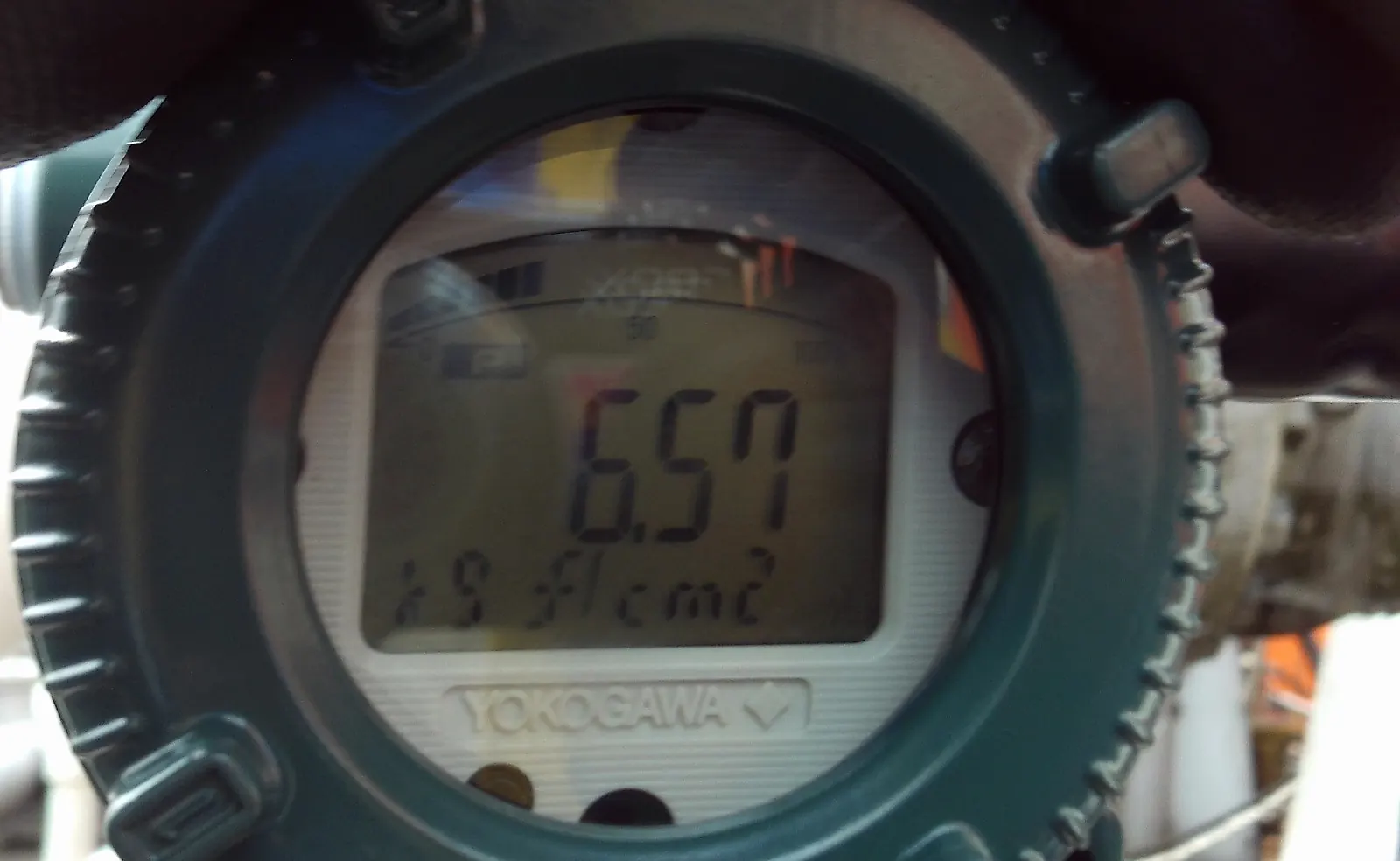
Tank gauging accuracy is how close the stock figure reported for a tank is to the quantity actually in it, and it depends on every link of the measurement chain, of which the gauge is only one. In Indonesia that chain also has a legal side: tanks and level gauges used to decide quantities in trade are measuring instruments under legal metrology, and fuel stock held at terminals has to be reported to BPH Migas.
This guide is for terminal managers, instrument engineers and inventory teams who need both sides in one place. It breaks the error budget into its parts with worked numbers, maps the international standards that set accuracy, and summarises the Indonesian regulations, each checked against the official text. The device itself is explained in the automatic tank gauge guide, and the general rules of legal metrology in tera, tera ulang and calibration.
Error budget
Where tank stock errors come from
A tank stock error comes from any of five places: the level reading, the calibration table, the free water measurement, the temperature and the correction calculation. The gauge reports a height. The calibration table (strapping table) turns that height into total observed volume. Free water is subtracted to give gross observed volume, and the volume correction factor, set by temperature and density, brings it to gross standard volume at 15 °C. The tank calibration table and volume correction factor articles walk through those steps with examples.
Each link fails in its own way. A gauge drifts when its still pipe bends or its reference point moves. A calibration table goes out of date when the tank bottom settles or the shell is repaired. A single-point thermometer misses temperature layers in a tall tank. API MPMS Chapter 12.1.1 puts the principle simply: to reconcile volumes, different parties must start from the same basic information, meaning the same capacity table, levels and temperatures, whether the data was gathered automatically or by hand.
Height of product, checked against a manual dip during verification.
Hover, focus or tap a step to read its note.How large each error is
Small errors in level and temperature become large volumes on large tanks, which is why a few millimetres or a fraction of a degree matter. OIML R 85, the international recommendation for automatic level gauges on storage tanks, sets a maximum permissible error of 1 mm for the gauge before installation and 4 mm after installation, when it is checked against a manual reference. On a vertical tank 40 m in diameter, the liquid surface is about 1,257 m², so each millimetre is about 1.26 kL and 4 mm is about 5 kL.
Temperature works through the volume correction factor. In the Measurement Canada table 54B for gasoline of density 730 kg/m³, the factor is 0.9811 at 30 °C and 0.9799 at 31 °C, a difference of 0.0012. A thermometer that reads one degree wrong therefore moves the standard volume of 5,000 kL of gasoline by about 6 kL. Heavier products expand less, but the effect is still large enough to justify multi-point temperature on tall tanks.
Calibration table errors are harder to see because they repeat in every reading. The fuel losses at terminals article shows how such systematic errors appear as apparent gains or losses at month end.
- MPE before installation (OIML R 85)
- 1 mm
- MPE after installation (OIML R 85)
- 4 mm
- Worked example: liquid surface of a 40 m tank
- about 1,257 m²
- Volume per mm on that tank
- about 1.26 kL
- 4 mm on that tank
- about 5 kL
- Gasoline VCF, 30 °C and 31 °C (table 54B, 730 kg/m³)
- 0.9811 and 0.9799
- 1 °C error on 5,000 kL gasoline
- about 6 kL
Which standards set the accuracy
International standards set how gauges, thermometers and calibration tables should perform and be verified, and Indonesian metrology practice refers to the same body of work. The table shows which document covers which link of the chain. API MPMS Chapter 3.1B covers automatic tank gauges on atmospheric tanks, including accuracy, installation, commissioning, calibration, verification and data transmission. Chapter 3.3 does the same for stationary pressurised tanks such as LPG spheres and bullets, and OIML R 85 explicitly includes pressurised shapes in its scope; see LPG terminal automation for the LPG side.
Check the scope line of each document before citing it in a specification. API MPMS Chapter 7.3 applies to fixed automatic tank thermometers for hydrocarbons with a Reid vapour pressure at or below 101.325 kPa, and notes that liquids above that, such as LPG, can need different performance and installation specifications. Chapter 3.3 covers liquids with a Reid vapour pressure of 103 kPa (15 psi) or more in pressurised tanks. Citing the wrong chapter asks a vendor to certify against requirements that were never written for that tank.
| Criterion | Covers | What to check in practice |
|---|---|---|
| OIML R 85-1 & 2 (2008) | Automatic level gauges on storage tanks, including spheres and bullets; MPE 1 mm before and 4 mm after installation | Verification of the installed gauge against a manual dip, in addition to the factory certificate |
| API MPMS Ch. 3.1B | ATGs on atmospheric tanks for custody transfer or inventory control | Mounting, still pipe condition, reference height and data transmission |
| API MPMS Ch. 3.3 | ATGs on stationary pressurised tanks in custody transfer | Installation and verification on spheres and bullets |
| API MPMS Ch. 7.3 | Fixed automatic tank thermometers | Number and height of temperature elements on tall tanks |
| API MPMS Ch. 2.2A | Calibration of upright cylindrical tanks by manual strapping | Date and basis of the table loaded in the TMS |
| API MPMS Ch. 12.1.1 | Calculation of static petroleum quantities | All parties use the same table, levels and temperatures |
The legal frame: metrology and tera
In Indonesia, a tank or level gauge used to determine quantities in trade is a legal measuring instrument, so it needs tera before use and tera ulang at fixed intervals. The base is UU 2/1981 on Metrologi Legal. Its Pasal 25 forbids using, at a place of business or delivery, an instrument without a valid tera mark, with a damaged mark, or repaired without re-approval. Its Pasal 27 forbids attaching an additional measuring or indicating device to an instrument that has been tera'd, and treats a modified instrument as not tera'd.
The current implementing rule is Permendag 24/2024 on tera and tera ulang, enacted on 4 October 2024 and promulgated on 10 October 2024. It revoked Permendag 67, 68 and 125 of 2018. The articles that matter most for a terminal are these:
- Pasal 2 makes tera and tera ulang mandatory for instruments used, directly or indirectly, for business, for delivering or receiving goods, or for carrying out regulations, among other purposes. Lampiran I lists the instruments and their intervals.
- Pasal 3 and Pasal 4 class instruments used in oil and gas exploitation, processing and transport as needing special handling, which the ministry's technical unit (UPT) carries out. Other instruments go to the regional legal metrology unit (UML).
- Pasal 5 ayat (2) requires tera ulang before the interval ends if the validity mark expires, the tera mark is damaged or the seal wire is broken, a repair affects the indication, or the indication departs from the technical requirements.
- Pasal 6 allows tera ulang at the place where a fixed instrument is installed, with the owner providing measurement standards, test material, support equipment, helpers and a workspace.
- Pasal 18 allows exemption from tera ulang for instruments used only for internal control, such as in a storage area closed to the public, provided they are not used for trade and carry the words "HANYA UNTUK KONTROL PERUSAHAAN" or "TIDAK DIGUNAKAN UNTUK BERDAGANG". Applications for special-handling instruments go to the head of the UPT.
The chart shows the intervals in Lampiran I for instruments found at fuel and LPG terminals. A footnote allows the test certificate (SKHP) of an insulated tank to be extended every 2 years. Citia's note on Permendag 24/2024 summarises the regulation for tanks and weighbridges.
The legal frame: reporting to BPH Migas
For fuel, the second legal duty is reporting stock to BPH Migas, set by Peraturan BPH Migas 9/2020 on the provision of operational fuel reserves. It applies to business entities holding a general fuel trading licence and covers their storage facilities at terminals, depots and other storage places. Pasal 2 requires operational reserves covering 23 days, and Pasal 4 phased this in at 11 days for 2020 to 2021, 17 days for 2022 to 2023 and 23 days from 2024.
Two articles touch the gauging system directly. Pasal 7 requires the licence holder to digitalise every storage facility so that current data can be delivered, and to integrate the digitalised facilities with the information system of BPH Migas. Pasal 8 makes the licence holder responsible for the correctness and accuracy of its reports, which must contain at least the average daily distribution, the daily volume of operational reserves and the location and capacity of each facility. Supporting data can include the handover records, physical stock-taking records (berita acara stok opname fisik) and distribution recaps. Under Pasal 9 the reports are daily records submitted every month by the 20th of the following month, through an online channel integrated with the BPH Migas system, with offline submission allowed when the channel fails.
Pasal 13 sets administrative sanctions for breaches of Pasal 2 to Pasal 9, from written warnings to suspension, freezing and revocation of the right to supply and distribute fuel. In practice, the ATG data in the TMS is the source of the daily volumes, so its accuracy is now a reporting matter as well as a commercial one. Keep the evidence that links the two: the gauge readings behind each daily figure, the dip checks and the signed stock-taking records. When a reported volume is questioned, those records show whether the difference came from the gauge, the table or the calculation. LPG falls under a different rule: Permen ESDM 26/2009 sets its own minimum operational reserves for LPG trading licence holders (Pasal 15).
Integrating ATGs without breaking the tera status
An ATG can feed a TMS and a reporting system without affecting its legal status, as long as the integration reads the gauge's own output and never changes the gauge or its indication. Pasal 27 of UU 2/1981 is the reason: adding a measuring or indicating device to a tera'd instrument makes it count as not tera'd. Data should therefore come through the gauge's communication interface or its field gateway, the seals should stay intact, and any change that touches the gauge head, its configuration or its display should be discussed with the UPT or UML first.
Communication paths fail more often than gauges. At Jambi, the ATG gateway replacement at Jambi restored ATG data to the TMS after an unstable gateway, and surge protectors were added on the RS-485 and Ethernet lines. The ATG assessment at Redeco found corrosion, water ingress and discontinued interface modules, and recommended phased replacement. Both are reminders that a stock figure for BPH Migas is only as reliable as the path from the gauge to the database. The multi-brand ATG integration article covers sites with gauges from more than one maker, and INTEGRA TMS describes how Citia collects the readings.
A compliance routine for a terminal
A short routine, kept in the TMS or the maintenance system, covers both the metrology and the reporting duties. The steps below are the minimum we suggest; the UPT or UML that serves the site decides the details for its instruments. Overfill protection is a separate safety layer and should not depend on the custody gauge; see overfill protection. For the wider system context, read the fuel terminal automation guide. Citia's field instrumentation service covers calibration and commissioning of field instruments.
Register every instrument
Tanks, ATGs, thermometers, meters and weighbridges, each marked as trade use or company control only.
Track due dates
Record the year code of each tera mark and book the UPT or UML well before it expires.
Watch the early triggers
Broken seals, repairs and drift beyond the requirements call for tera ulang before the interval ends.
Verify gauges against dips
Compare each ATG with a manual dip on a fixed schedule and log the difference.
Check the reporting chain
Confirm each month that the TMS volumes match the daily records sent to BPH Migas.
Terms used in this guide
- ATG
- Automatic tank gauge: an instrument that measures liquid level in a tank continuously.
- MPE
- Maximum permissible error: the largest error the standard allows.
- Calibration table
- Table that converts level to volume for one tank; also called strapping table.
- VCF
- Volume correction factor: brings an observed volume to the volume at 15 °C.
- Tera ulang
- Periodic legal verification and marking of a measuring instrument by an authorised officer.
- UPT
- Technical unit of the Ministry of Trade that handles instruments needing special handling, such as oil and gas.
- UML
- Unit Metrologi Legal: the regional legal metrology unit of a city, regency or DKI Jakarta.
- SKHP
- Surat Keterangan Hasil Pengujian: the written test result issued for an instrument.
- Operational reserves
- Fuel held as part of a licence holder's operations, counted in days of average distribution.
Frequently asked questions
How accurate is an automatic tank gauge?
An automatic level gauge must stay within 1 mm before installation and 4 mm after installation under OIML R 85. The installed figure is what counts for stock, because the tank adds its own errors that the gauge cannot remove.
How often must a storage tank and its ATG be re-verified in Indonesia?
Under Permendag 24/2024, an automatic level gauge needs tera ulang every 2 years, a vertical cylindrical tank every 6 years and a spherical tank every 12 years. Re-verification is due earlier after a broken seal, a repair that affects the indication or an indication outside the requirements.
Who carries out tera on tanks at a fuel terminal?
Authorised officers (pegawai berhak) of the Direktorat Metrologi, a UPT or a UML carry it out. Instruments used in oil and gas exploitation, processing and transport need special handling and go to the UPT; confirm with the unit that serves your site which route applies to your tanks.
Does BPH Migas require ATG data from fuel terminals?
BPH Migas requires fuel trading licence holders to digitalise their storage facilities and integrate them with its information system (Peraturan BPH Migas 9/2020, Pasal 7). The regulation names no gauge type; in practice the daily stock volumes come from the tank gauging system.
Can an ATG connected to a TMS keep its tera status?
Yes, if the TMS only reads the gauge output and nothing is added to or changed on the gauge. UU 2/1981 Pasal 27 treats an instrument with an added measuring or indicating device as not tera'd, so discuss any change at the gauge with the UPT or UML first.
Is a calibration certificate enough instead of tera?
No, a calibration certificate does not replace tera for an instrument used in trade, because only authorised officers can apply the legal tera mark. Calibration remains useful for internal control and for instruments exempted from tera ulang under Pasal 18 of Permendag 24/2024.
Sources and further reading
- Undang-Undang Nomor 2 Tahun 1981 tentang Metrologi Legal (opens in a new tab)
- Peraturan Menteri Perdagangan Nomor 24 Tahun 2024 tentang Kegiatan Tera dan Tera Ulang Alat Ukur, Alat Takar, Alat Timbang, dan Alat Perlengkapan Metrologi Legal (opens in a new tab)
- JDIH Kementerian Perdagangan: Permendag 24/2024 (tanggal penetapan dan pengundangan, status) (opens in a new tab)
- Peraturan Badan Pengatur Hilir Minyak dan Gas Bumi Nomor 9 Tahun 2020 tentang Penyediaan Cadangan Operasional Bahan Bakar Minyak (BN 2020 No. 1789) (opens in a new tab)
- Permen ESDM No. 26 Tahun 2009 tentang Penyediaan dan Pendistribusian Liquefied Petroleum Gas (opens in a new tab)
- OIML R 85-1 & 2: Automatic level gauges for measuring the level of liquid in stationary storage tanks (opens in a new tab)
- Petroleum Measurement catalog: MPMS Chapters 2.2A, 3.1B, 3.3, 7.3 and 12.1.1 (opens in a new tab)
- Volume correction factors: gasoline, density 730 kg/m3 at 15 °C (Table 54B) (opens in a new tab)
- Redeco ATG fault investigation
Next step
Prepare the technical discussion for your facility.
Bring the equipment list, diagrams and symptoms you have. The Citia team helps map the next step.
Related products and solutions
- KnowledgeAutomatic tank gauging (ATG) for fuel tanks: types, working principles and accuracyAn automatic tank gauge (ATG) reads level, temperature and water in a storage tank continuously and turns them into volume with the tank calibration table.
- KnowledgeTank strapping tables, innage and ullage: how tank volume is calculatedA tank strapping table turns liquid height into volume for one specific tank. It is built from the tank geometry and, in Indonesia, validated through legal metrology.
- KnowledgeLegal metrology in Indonesia: verification (tera), re-verification and calibrationTera marks an instrument as valid for use, tera ulang repeats it periodically, and calibration gives no legal status. The rules and the process in Indonesia.
- KnowledgeVolume correction factor (VCF) and ASTM Table 54B explainedA volume correction factor (VCF) converts fuel volume at the measured temperature into volume at 15 °C. For refined products it comes from Table 54B.
- ProductINTEGRA TMSCollects ATG readings from every tank for live levels, history, tank tickets and stock posting to SAP.
- NewsPermendag 24/2024: re-verification intervals for tanks, level gauges and weighbridgesPermendag No. 24 of 2024 sets which measuring instruments need tera ulang and how often: yearly for weighbridges, every two years for automatic level gauges, six for vertical tanks.
- ProjectRedeco ATG fault investigationATG equipment assessment and communication restoration