
Terminal Operations
What is a TBBM? How fuel moves from an Indonesian fuel terminal to petrol stations
A TBBM is an Indonesian fuel terminal that receives, stores and loads fuel into tanker trucks for petrol stations. Here is how it works.
- Topic
- Terminal Operations
- Updated
- 13 November 2026
- Reading time
- 4 min
- Sections
- 5
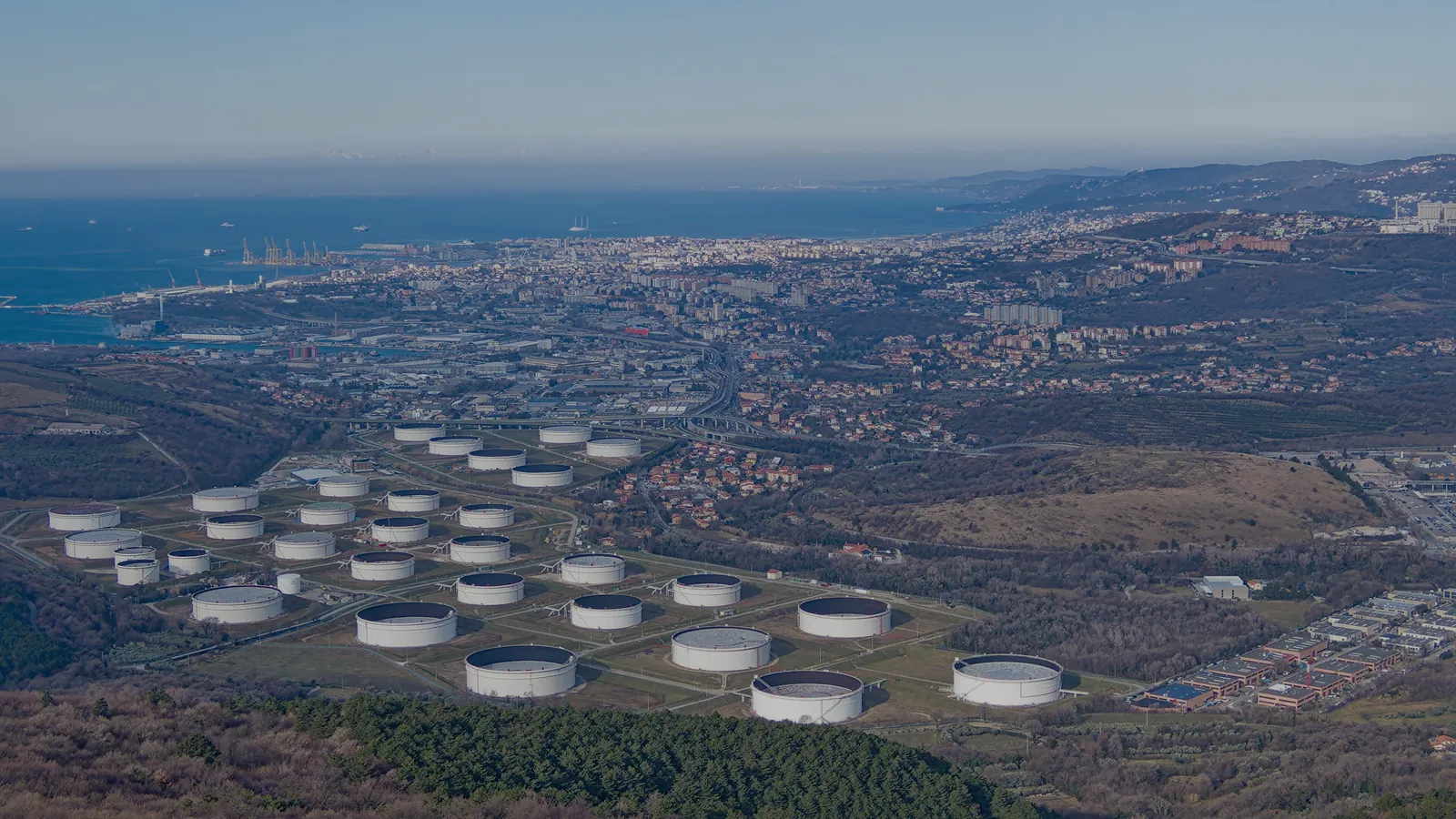
A TBBM (Terminal Bahan Bakar Minyak) is a facility that receives fuel from ships, pipelines or refineries, stores it in storage tanks, and then dispatches it into tanker trucks for delivery to petrol stations (SPBU) and industrial customers.
In English the closest terms are fuel terminal or fuel depot. Most TBBM in Indonesia are operated by Pertamina Patra Niaga, and the word appears in station names such as TBBM Jambi or TBBM Padalarang. For the systems that run truck loading inside a terminal, see the INTEGRA TAS product page and the comparison of TAS, TMS and TPS.
Flow
How fuel reaches a TBBM and leaves it
Fuel arrives in bulk and leaves in truckloads. The terminal is the point where one large transfer becomes many small ones.
Receipt usually comes by tanker ship at a jetty, by pipeline from a refinery or a larger terminal, or both. Each receipt is measured against the tank gauges before and after the transfer. From the storage tanks, pumps feed the loading arms in the filling shed, where meters and batch controllers measure each compartment. The loaded tanker truck then drives to SPBU or to an industrial customer with a delivery note (surat jalan) printed from the same transaction.
Bulk receipt at the jetty or from a refinery pipeline.
Hover, focus or tap a step to read its note.Terms
TBBM, depot and integrated terminal
The three names describe the same kind of facility at different scales. None of them is a strict technical class; they come from how operators name their sites.
TBBM and fuel terminal are the general terms. Depot is common for smaller sites and for LPG and aviation fuel. Integrated Terminal is a name Pertamina Patra Niaga gives to some large sites that handle several products. According to Pertamina, Integrated Terminal Balongan dispatches through more than 50 fuel tanker trucks and 90 LPG tanker trucks.
What matters for engineering is the scope: number of products, receipt modes, number of bays and whether LPG is handled on the same site.
| Criterion | TBBM / fuel terminal | Integrated Terminal |
|---|---|---|
| Products | Usually several fuel grades | Fuel grades, often with LPG or avtur |
| Receipt | Ship, pipeline or truck | Often ship and pipeline |
| Systems | TAS, TMS, gate, pumps | Same, plus LPG filling and weighing |
Regulation
Who regulates fuel distribution in Indonesia
Fuel distribution is a regulated business, and the terminal is where much of that oversight becomes paperwork. Two legal texts set the frame.
Law No. 22 of 2001 on Oil and Gas is the base law for upstream and downstream activities. Government Regulation No. 67 of 2002 establishes the regulatory body for the supply and distribution of fuel and pipeline gas transport, known as BPH Migas.
In a 2023 press release, the Ministry of Energy and Mineral Resources (ESDM) reported that BPH Migas asked assigned companies to distribute subsidised fuel on target and on volume. The same release notes that Pertamina also supervises its own distribution. Both regulations have been amended; check the current version on the official legal database before citing a specific article.
- Base law
- Law No. 22 of 2001 on Oil and Gas (amended)
- Regulatory body
- Government Regulation No. 67 of 2002, establishing BPH Migas (amended by PP No. 49 of 2012)
- Supervisor of fuel distribution
- BPH Migas, with the assigned business entities
- Main operator of TBBM
- Pertamina Patra Niaga
Operations
A day of operation at a fuel terminal
A terminal runs on a fixed rhythm of measure, load and reconcile. Loading may run around the clock when demand is high, but the checkpoints stay the same.
Quality is checked at more than one point. Pertamina describes Integrated Terminal Balongan sampling fuel before it leaves the refinery, after it arrives at the terminal, and again every day when it is loaded into tanker trucks. Stock is measured at shift change and at the end of the day, and the loaded volumes from the TAS are compared with the change in tank stock.
Checkpoints in a terminal day
- Before receipt
Tank gauged
Opening level and temperature recorded on a tank ticket.
- On receipt
Quality and quantity
Samples tested and received volume measured.
- Shift start
Bays ready
Grounding, arms and meters checked; TAS opens the queue.
- During loading
Trucks loaded
Each compartment loaded to its preset and sampled as required.
- End of day
Reconciliation
Loaded volumes compared with tank stock change.
Inventory
Why stock is recorded twice
A terminal measures its tanks with automatic gauges and also by hand, because each method checks the other. The automatic tank gauge (ATG) gives continuous readings for daily work; manual dipping with a tape gives an independent reading for official records and for checking the gauge.
The ATG readings flow into a tank management system such as INTEGRA TMS, which turns level into volume with the tank calibration table. When the two readings drift apart, the cause is often in the gauge mounting, the calibration table or the communication path, not in the product. The ATG integration assessment lists what to prepare before that investigation. At Cikampek, Citia's tank monitoring upgrade included loop checks, I/O tests and functional tests before handover.
Other systems sit around the tanks and the filling shed. Pump control at TBBM Cikampek matches pump load to distribution demand. At the Jambi terminal, the TAS links shipment, gate-in, the filling shed and gate-out with SAP and SIOD. At an LPG terminal such as Pulau Layang, the same pattern covers stock reporting to SAP and tank-ticket generation.
Terms used in this article
- TBBM
- Terminal Bahan Bakar Minyak, a fuel terminal that receives, stores and dispatches fuel.
- Depot
- A fuel or LPG storage and dispatch site, often smaller than a terminal.
- Integrated Terminal
- Name Pertamina Patra Niaga uses for some large terminals handling several products.
- Filling shed
- The covered loading area where tanker trucks are filled through loading arms.
- Tank ticket
- Record of tank level, temperature and volume at a given time.
- Surat jalan
- Delivery note that travels with the tanker truck.
- BPH Migas
- Indonesia's downstream oil and gas regulatory body, which supervises fuel supply and distribution.
Frequently asked questions
What is the difference between a TBBM, a depot and an integrated terminal?
They are names for the same kind of facility at different scales. TBBM is the general term, depot is common for smaller or LPG and aviation sites, and Integrated Terminal is a name Pertamina Patra Niaga uses for some large multi-product sites.
Who regulates fuel distribution in Indonesia?
BPH Migas supervises the supply and distribution of fuel, under Law No. 22 of 2001 and Government Regulation No. 67 of 2002. Assigned companies such as Pertamina carry out distribution and also supervise their own channels.
What is a filling shed?
A filling shed is the covered area of a terminal where tanker trucks are loaded through loading arms. Each bay has meters and a batch controller that stop the flow at the authorized volume.
Why is stock at a terminal recorded by both ATG and manual dipping?
Stock is recorded both ways because each method checks the other. The ATG gives continuous readings for operations, while manual dipping gives an independent reading for official records and gauge verification.
How does fuel get from a terminal to a petrol station?
Fuel goes from the terminal to a petrol station by tanker truck. The truck is loaded in the filling shed against an order, leaves with a delivery note, and unloads into the station's underground tanks.
Sources and further reading
- Undang-undang (UU) Nomor 22 Tahun 2001 tentang Minyak dan Gas Bumi (opens in a new tab)
- Peraturan Pemerintah (PP) Nomor 67 Tahun 2002 tentang Badan Pengatur Penyediaan dan Pendistribusian BBM (opens in a new tab)
- Pemerintah Ingatkan Badan Usaha Penugasan Distribusikan BBM Tepat Sasaran dan Tepat Volume (opens in a new tab)
- Jantung Energi Jawa Barat: Rahasia Integrated Terminal Balongan Jaga Kualitas BBM (opens in a new tab)
- Fuel Terminal Jambi distribution workflow (opens in a new tab)
- Cover photo by Ajznponar, CC0 (opens in a new tab)
Next step
Prepare the technical discussion for your facility.
Bring the equipment list, diagrams and symptoms you have. The Citia team helps map the next step.
Related products and solutions
- KnowledgeTerminal Automation System (TAS): what it is, its components and how it worksA terminal automation system (TAS) runs fuel and LPG truck loading, from order and gate-in to metering, delivery documents and gate-out.
- KnowledgeAutomatic tank gauging (ATG) for fuel tanks: types, working principles and accuracyAn automatic tank gauge (ATG) reads level, temperature and water in a storage tank continuously and turns them into volume with the tank calibration table.
- KnowledgeTPS Online (Indonesian Customs): what it is, who must report and how it worksTPS Online is the electronic data exchange between customs and a temporary storage (TPS) operator for goods entering and leaving. Learn who must connect, what is reported and what to do when a response is unclear.
- ProductINTEGRA TASRuns truck loading at fuel and LPG terminals, from order and gate-in to filling and gate-out documents.
- ProductINTEGRA TMSCollects ATG readings from every tank for live levels, history, tank tickets and stock posting to SAP.
- KnowledgeTAS, TMS and TPS Integration: what does each system manage?Separate distribution processes, inventory measurements and document reporting before defining integration.
- ProjectFuel Terminal Jambi distribution workflowTAS, device integration and LTSA support
- ProjectPulau Layang distribution automationTAS operations and terminal-system support
- NewsPertamina TBBM CikampekA reference for pump control at TBBM Cikampek, covering scheduling and matching pump load to distribution demand.