
Tank Farm & Inventory
Automatic tank gauging (ATG) for fuel tanks: types, working principles and accuracy
An automatic tank gauge (ATG) reads level, temperature and water in a storage tank continuously and turns them into volume with the tank calibration table.
- Topic
- Tank Farm & Inventory
- Updated
- 13 November 2026
- Reading time
- 9 min
- Sections
- 8
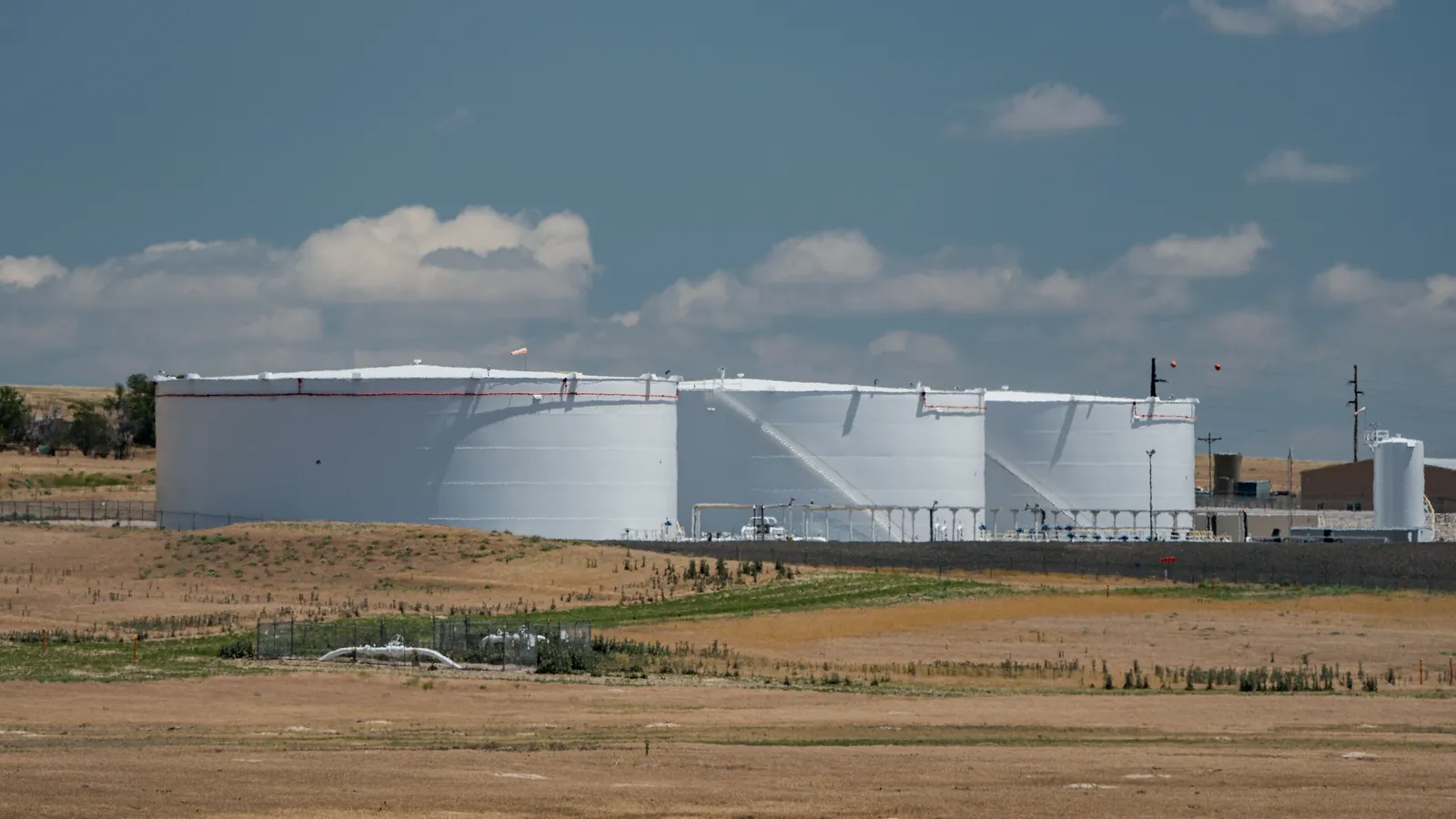
An ATG (automatic tank gauge) is a measuring instrument that reads the liquid level in a tank automatically and continuously, usually together with temperature and water level, and converts it into volume using the tank calibration table.
In an Indonesian fuel terminal (TBBM), the ATG sits on the roof of each storage tank and sends its readings to the control room. Operators still dip tanks by hand with a tape, but the ATG gives the live picture between dips and feeds the tank management system that issues tank tickets. This guide covers what an ATG measures, the main gauge types, how accurate they are and how the data reaches the inventory system.
The supporting guides go deeper into each step: tank calibration tables and ullage, volume correction to 15 °C, tank management systems and tank tickets, high-high alarms under API 2350 and integrating ATGs from several brands.
Basics
What an ATG measures on a storage tank
An ATG answers one question over and over: how high is the product in this tank right now. Around that core reading, most terminal installations add two more measurements that the volume calculation needs.
Level. The gauge measures either innage (from the dipping datum point at the bottom up to the liquid surface) or ullage (from the upper reference point down to the surface). OIML R 85 defines both terms, and the gauge converts one into the other with the tank reference height.
Temperature. Product temperature changes the volume, so inventory and custody gauges carry a multi-point temperature element that averages the sensors covered by liquid. API MPMS Chapter 7.3 describes these fixed automatic tank thermometer systems.
Free water. Water collects at the tank bottom from condensation and from receipts. A bottom interface probe, or a servo gauge in interface mode, measures it so the water can be subtracted before the product volume is calculated.
Some systems also derive density, either from a servo density profile or from pressure transmitters in a hybrid system (API MPMS Chapter 3.6). Density is needed later, when the volume is corrected to 15 °C.
- Level (innage or ullage)
- Radar or servo gauge on a roof nozzle or still pipe
- Average temperature
- Multi-point element, submerged sensors averaged
- Free water
- Bottom interface probe or servo interface mode
- Density (optional)
- Servo density profile or hybrid pressure measurement
- Status
- Gauge diagnostics and level alarm setpoints
Types
Radar, servo, magnetostrictive and hydrostatic gauges
Four measuring principles cover almost every ATG in use. They differ in what touches the product, what else they can measure and where they are normally installed.
Radar gauges send microwaves down to the liquid surface and time the returning echo. Nothing touches the product, so wear is low. Custody-grade models such as the Rosemount 5900S carry OIML R 85 type approvals, and Emerson states a 0.5 mm instrument accuracy for its premium version.
Servo gauges hang a small displacer on a measuring wire. A servo motor keeps the displacer balanced at the surface and counts the wire movement. Because the displacer can be driven down on command, the same gauge can find the water interface. Honeywell lists product level, interface level and temperature among the measurements of its Enraf Servo 954.
Magnetostrictive probes use a float that rides on a rod; the electronics time a pulse along the rod to locate the float. They are typical of underground tanks at fuel stations (SPBU), which is why searches for an SPBU ATG mostly lead to this type.
Hydrostatic systems measure pressure at fixed points on the tank shell and calculate mass and density. Combined with a level gauge, they form the hybrid tank measurement system described in API MPMS Chapter 3.6.
| Criterion | Radar | Servo | Magnetostrictive | Hydrostatic |
|---|---|---|---|---|
| Principle | Travel time of a microwave echo | Displacer on a wire, balanced by a motor | Float position on a rod, found by a timed pulse | Pressure at fixed points on the shell |
| Contact with product | None | Displacer at the surface | Float in the product | Sensors at shell nozzles |
| Extra measurements | Temperature and water through separate probes | Water interface, density on some models | Water float and temperature on the same probe | Density and mass |
| Typical use | Terminal and refinery storage tanks | Terminal tanks, including custody service | Underground tanks at fuel stations | Hybrid systems with a level gauge |
| Main maintenance point | Antenna build-up, still pipe condition | Wire, drum and displacer wear | Float sticking on the rod | Transmitter drift, blocked nozzles |
How it works
From a level reading to standard volume
An ATG reports a height, not a volume. Turning that height into a stock figure that two parties can agree on takes a fixed sequence of steps, and every step uses data from outside the gauge.
First the level is looked up in the tank calibration table (strapping table) to give the total observed volume. Free water is subtracted to give the gross observed volume. Temperature and density then set the volume correction factor, which brings the figure to gross standard volume at 15 °C. The guides on tank calibration tables and volume correction factors walk through each step with examples.
API MPMS Chapter 12.1.1 states the principle plainly: to reconcile volumes, different parties must start from the same basic information, meaning the same capacity table, levels and temperatures, whether that information was gathered automatically or by hand. A gauge that reads perfectly but feeds an outdated table still produces the wrong stock.
Floating-roof tanks add one more correction. While the roof floats, it displaces product equal to its own weight, so the table or the TMS applies a roof correction above the level where the roof lands. Readings taken in the zone where the roof is only partly floating are unreliable, and most procedures flag them.
The table is also a legal document. Lampiran I of Permendag No. 24 Tahun 2024 lists vertical cylindrical fixed tanks for petroleum products with a re-verification interval of 6 years, so the TMS must always hold the table from the latest certificate.
Level, average temperature and free-water level from the tank roof.
Hover, focus or tap a step to read its note.Accuracy
How accurate is an ATG?
ATG accuracy has two parts: what the instrument achieves on a test bench, and what it achieves once mounted on a real tank. The second figure is always larger.
OIML R 85 (edition 2008), the international recommendation for automatic level gauges on storage tanks, sets a maximum permissible error of 1 mm before installation and 4 mm after installation, where the gauge is checked against a manual reference measurement. The same recommendation requires the gauge to resolve level within 1 mm.
The installed figure is larger because the tank adds its own errors. R 85 notes that bottom deformation, roof movement and shell bulging affect the volume calculated from the level, and the gauge cannot compensate for them. Mounting matters as much as electronics: a bent or corroded still pipe, or a nozzle that is too long, shows up later as drift.
In Indonesia, level gauges used in trade fall under legal metrology. Lampiran I of Permendag No. 24 Tahun 2024 lists radar, servo and float level gauges with a re-verification (tera ulang) interval of 2 years.
- 1 mmMaximum permissible error before installationOIML R 85-1 & 2, edition 2008
- 4 mmMaximum permissible error after installation on the tankOIML R 85-1 & 2, edition 2008
- 0.5 mmInstrument accuracy stated for a premium custody-transfer radar gaugeEmerson, Rosemount 5900S datasheet
- 2 yrRe-verification interval for automatic level gauges in IndonesiaPermendag No. 24 Tahun 2024, Lampiran I
Field checks
Why ATG and manual dip readings differ
Every terminal sees it sooner or later: the ATG shows one figure and the operator's dip tape shows another. Most of the time neither instrument is broken; the two readings were taken under different conditions.
API MPMS Chapter 3.1A sets the practice for manual gauging, including how to verify tape length in the field and how bob weight, temperature and the gauging reference point affect the result. Chapter 3.1B covers accuracy, installation, commissioning, calibration and verification of ATGs. A fair comparison follows both.
- Time. The dip is taken minutes after the logged ATG value, while the tank is still settling after a transfer.
- Reference height. Tank bottoms and roofs move with load and temperature, so the reference height at the dip hatch changes.
- Position. The dip hatch and the ATG nozzle sit at different points of the roof, and a sloping bottom or tilted floating roof reads differently at each.
- Water and sludge. A bottom layer of water or sediment blurs a dip cut and can confuse an interface probe.
- Configuration. A wrong tank offset or a configuration lost after a repair shifts every reading by the same amount.
Record every comparison, including the ones that agree. A long history of comparisons is worth more than one big test, because it shows whether the ATG difference is stable, creeping or jumping after specific work on the tank.
The working rule is to compare like with like: same time, same reference point, tank at rest, and repeated readings instead of a single dip.
Let the tank settle
No transfer in progress, mixers stopped, floating roof at rest.
Check the reference height
Measure it at the dip hatch and compare it with the value on the calibration certificate.
Dip and log the ATG together
Record the ATG value at the moment the tape cuts the surface.
Repeat the dip
Take repeated readings as the site procedure requires and use the agreed value.
Compare level first, then volume
Use the same table, water cut and temperature for both figures.
Investigate before adjusting
If the difference is outside the site limit, check configuration and mounting before changing the gauge offset.
Selection
Choosing an ATG for a terminal tank
The right gauge depends on what the reading will be used for. A gauge for daily inventory and a gauge for custody transfer can look alike on the roof but are specified, approved and maintained differently.
- Service. Custody transfer needs a gauge with metrological type approval and a verification procedure; inventory control can accept a simpler instrument.
- Tank construction. Floating-roof tanks usually need a still pipe for radar, or a servo gauge in a stilling well. Fixed-roof tanks give more freedom of position.
- Product. Heavy or sticky products foul displacers and floats; light products with vapour favour radar antennas designed for condensation.
- Hazardous area. The gauge, its cabling and the junction boxes must carry certification for the zone where they are installed.
- Communication. Confirm the output protocol and how it will reach the existing TMS before ordering, not after delivery.
- Lifecycle. Ask how long the interface modules will be supported. Discontinued interfaces were the root of several faults Citia has handled.
Write these points into the purchase specification and the factory acceptance test. A gauge selected for its accuracy figure alone can still fail at commissioning because of a protocol or mounting mismatch.
Plan maintenance at the same time. Agree which spares stay on site, who may recalibrate the gauge after a repair, and how the tera ulang schedule fits the terminal shutdown plan. These answers decide how long a tank stays without a trusted reading when something fails.
Integration
ATG data, alarms and the tank management system
On its own an ATG is a display on a tank roof. Its value to operations comes from the system that collects every gauge, keeps the history and turns levels into stock.
Gauges talk through field interfaces: proprietary buses on older installations, Modbus RTU over RS-485 on many newer ones. An interface unit or gateway polls each gauge and passes level, temperature and status to the server. The INTEGRA TMS page describes this path for Citia's own system: ATG, industrial gateway, SQL database, then tank tickets and stock posting to SAP. Fleets with several gauge brands need extra care, covered in multi-brand ATG integration.
An ATG high alarm warns the operator, but it should not be the only protection against overfill. If the gauge freezes, its alarm freezes with it. API 2350 recommends that the high-high alarm come from a sensor independent of the ATG; see high-high alarms and API 2350.
ATG inventory is also the starting point for loss control. When book stock and measured stock drift apart, the cause can sit in the gauge, the meter or the paperwork, and fuel losses at terminals shows how to separate them.
Every value that leaves the gauge should carry its time stamp and a quality flag. A TMS that keeps showing the last stored level without saying it is old invites a wrong decision during a receipt. Good practice is to grey out stale values and raise a communication alarm, separate from the process alarms.
Live levels
Every tank on one screen, with the time of the last valid reading.
History
Trends for receipts, deliveries and settling after transfers.
Alarms
High and low setpoints from the gauge, backed by an independent high-high layer.
Tank tickets
Opening and closing figures for each movement, ready for stock posting.
In the field
Field notes from Citia ATG projects
Most ATG problems Citia meets on site do not start at the sensor. They start in power, wiring and communication, then appear in the control room as frozen or missing values.
At PT Redeco Petrolin Utama in 2024, the assessment found gauges that read wrongly, read nothing or were dead, corrosion and water ingress in outdoor housings, and discontinued IFX-20000 interface modules. Communication paths were restored, readings were compared with stick measurements, and units that could not be repaired were recommended for migration.
At Redeco in 2025, an Endress+Hauser ATG power supply failed after a lightning surge; the blown fuse and the damaged varistor were replaced and the unit was retested. At the Jambi fuel terminal in 2026, the ATG gateway (Advantech ECU-1051) was replaced and surge protectors were added on the RS-485 Modbus and Ethernet lines. The Cikampek tank-monitoring upgrade in 2025 shows the other side: loop checks, I/O tests and functional tests before handover.
The shared lesson is to protect power and communication lines from surges, keep spares for interfaces that are no longer made, and close every repair with an end-to-end test from the gauge to the TMS screen. The ATG integration checklist lists what to prepare before such work.
Citia ATG and TMS work on record
- 2024
Redeco ATG assessment
Faulty and discontinued interfaces found; communication restored and migration recommended.
- 2025
Redeco ATG power supply
Fuse and varistor replaced after a lightning surge.
- 2025
Cikampek tank monitoring
TMS upgrade with loop checks, I/O and functional tests.
- 2026
Jambi ATG gateway
Gateway replaced and surge protection added on RS-485 and Ethernet.
Terms used in this guide
- Innage (dip)
- Height of the liquid measured from the dipping datum point at the tank bottom up to the surface.
- Ullage
- Distance from the upper reference point at the roof down to the liquid surface.
- Reference height
- Distance between the dipping datum point and the upper reference point. Innage equals reference height minus ullage.
- Strapping table
- Table that converts the liquid height of one specific tank into volume.
- Still pipe
- Vertical pipe inside the tank that guides a radar signal or a displacer and calms the surface.
- Free water
- Water lying as a separate layer at the bottom of the tank, measured and subtracted from the product volume.
- TOV and GOV
- Total observed volume from the table, and gross observed volume after removing free water.
- GSV
- Gross standard volume: the observed volume corrected to the standard temperature of 15 °C.
- Custody transfer
- Measurement that decides how much product changes ownership, so it needs approved instruments and procedures.
Frequently asked questions
What is the difference between an ATG and manual dipping?
An ATG measures tank level automatically and continuously, while manual dipping is a person lowering a tape at a given moment. Manual gauging under API MPMS Chapter 3.1A remains the reference for verifying an installed ATG, so most terminals use both: the ATG for live stock and the dip for checks and disputes.
How accurate is a radar tank gauge?
A radar tank gauge approved under OIML R 85 must stay within 1 mm before installation and 4 mm after installation on the tank. Individual products can be tighter on the bench; Emerson states 0.5 mm instrument accuracy for the premium Rosemount 5900S. The installed result depends on the still pipe, the nozzle and the tank itself.
Can an ATG replace an overfill alarm?
No, an ATG high alarm should not be the only overfill protection. If the gauge sticks or loses power, its alarm fails at the same time. API 2350 recommends a high-high alarm from a sensor that is independent of the ATG.
How does ATG data get to the TMS?
ATG data reaches the TMS through an interface unit or gateway that polls each gauge, often over Modbus RTU on RS-485, and forwards level, temperature and status over the network. The TMS stores the readings, applies the tank tables and produces stock figures and tank tickets.
Why do the ATG and the manual dip show different numbers?
The ATG and the dip usually differ because they were taken under different conditions: another time, another point on the roof, a changed reference height or water at the bottom. Compare them with the tank at rest and both readings taken together before adjusting anything.
What is the difference between a terminal ATG and an SPBU ATG?
Terminal ATGs are usually radar or servo gauges on large aboveground tanks, while fuel stations mostly use magnetostrictive probes in underground tanks. Both measure level, temperature and water, but terminal gauges often serve custody transfer and feed a tank management system.
How often must an ATG be re-verified in Indonesia?
An ATG used in trade must be re-verified every 2 years, the interval Permendag No. 24 Tahun 2024 sets for automatic level gauges such as radar and servo types. Re-verification is required earlier if the seal is broken, the gauge is repaired in a way that affects its reading, or its indication deviates from the technical requirements.
Sources and further reading
- Petroleum Measurement catalog: MPMS Chapters 3.1A, 3.1B, 3.6, 7.3 and 12.1.1 (opens in a new tab)
- OIML R 85-1 & 2: Automatic level gauges for measuring the level of liquid in stationary storage tanks (opens in a new tab)
- Rosemount 5900S Radar Level Gauge, product data sheet (opens in a new tab)
- Enraf Servo 954 (opens in a new tab)
- Permendag No. 24 Tahun 2024 tentang Kegiatan Tera dan Tera Ulang Alat Ukur, Alat Takar, Alat Timbang, dan Alat Perlengkapan Metrologi Legal (opens in a new tab)
- Redeco ATG fault investigation (opens in a new tab)
- Jambi fuel terminal: replacement of ATG gateway (ECU) spare part (opens in a new tab)
- Cover photo by Tony Webster, CC BY 2.0 (cropped and colour graded) (opens in a new tab)
Next step
Prepare the technical discussion for your facility.
Bring the equipment list, diagrams and symptoms you have. The Citia team helps map the next step.
Related products and solutions
- KnowledgeWhat is a tank management system? From level readings to tank tickets and stockA tank management system (TMS) collects ATG data from every tank, calculates standard volume, records stock movements and issues tank tickets.
- KnowledgeTank strapping tables, innage and ullage: how tank volume is calculatedA tank strapping table turns liquid height into volume for one specific tank. It is built from the tank geometry and, in Indonesia, validated through legal metrology.
- KnowledgeIntegrating multi-brand ATGs into one TMS: protocols, gateways and testingATGs from different brands speak different protocols. An interface unit or gateway translates them into one format, and each tank is then tested against a manual dip.
- ProductINTEGRA TMSCollects ATG readings from every tank for live levels, history, tank tickets and stock posting to SAP.
- KnowledgeWhat to prepare before an ATG integration assessmentDevice lists, protocols, tank tables and network conditions make TMS integration discussions more precise.
- ProjectRedeco ATG fault investigationATG equipment assessment and communication restoration
- ProjectJambi fuel terminal: replacement of ATG gateway (ECU) spare partThis project replaced the spare part Gateway ATG ECU-1051 Advantech at the Jambi fuel terminal to restore data communication between the Automatic Tank Gauging (ATG) and the Tank Management System (TMS) application.
- NewsATG data integration: Tokyo Keiso and Endress+Hauser protocol compatibilityCovers Tokyo Keiso and Endress+Hauser ATG data integration through compatible communication protocols for tank level monitoring.
- ProductINTEGRA HLARaises high, high-high, low and low-low level alarms for each tank.