
Regulation and Integration
B50 at fuel terminals: what changes in terminal automation
B50 means at least 50% biodiesel in diesel from 1 July 2026. See what changes in product data, recipes, batch controllers and documents, and how to test before the first load.
- Topic
- Regulation and Integration
- Updated
- 13 November 2026
- Reading time
- 6 min
- Sections
- 8
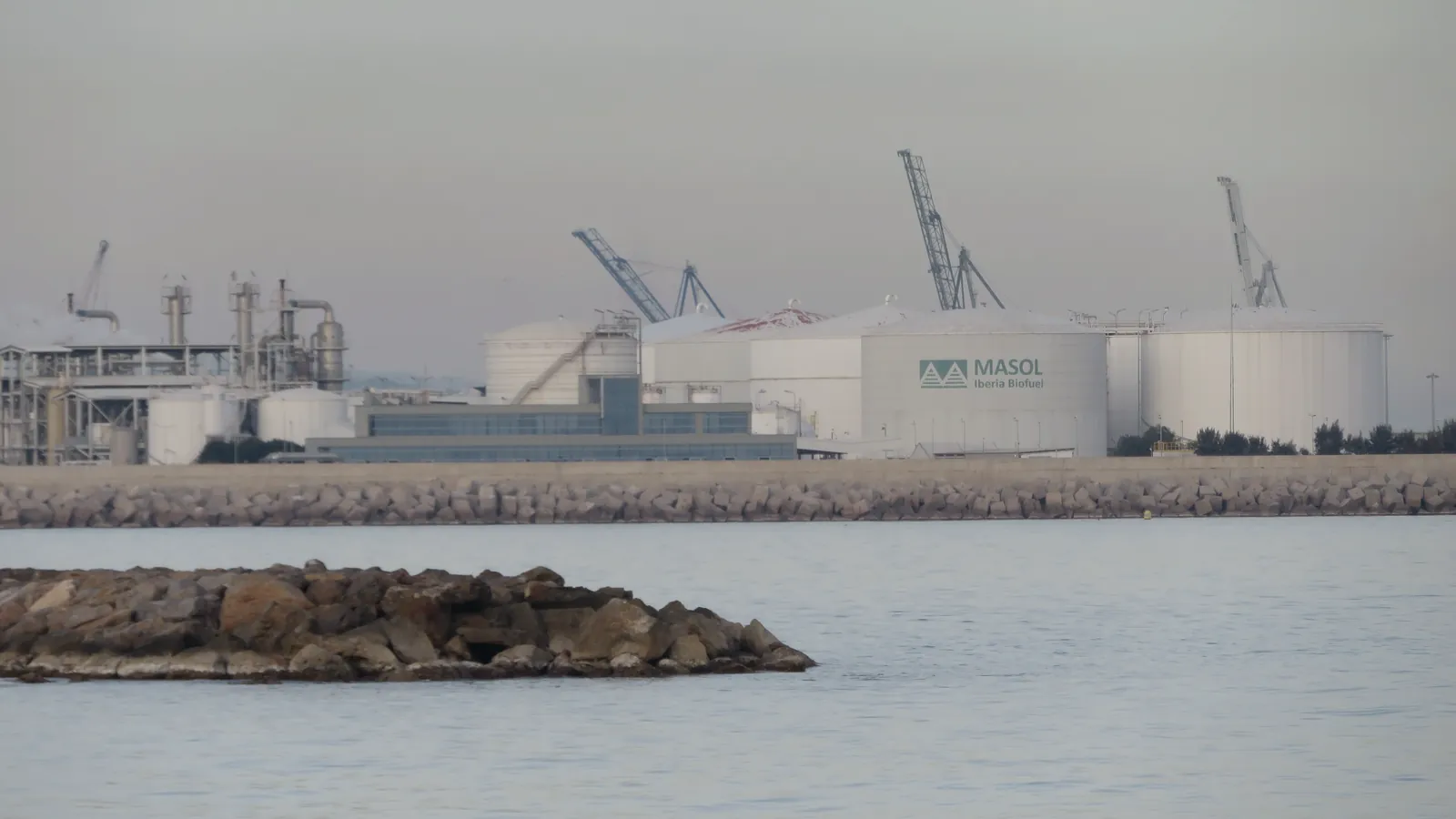
When a terminal moves from B40 to B50, its automation system needs updates to product master data, blend recipes and ratios, density and temperature tables, batch controller configuration and delivery documents, followed by a full retest before dispatch.
B50 is diesel fuel (minyak solar) that contains biodiesel at a minimum share of 50%. This guide looks at the change from the terminal system's side. It covers what the decree requires, where blending happens, which parts of the control and business systems change, and how Citia handled the product update at the Padalarang fuel terminal. The first mention of the terminal automation system and its batch controller is the best starting point for newcomers. Status is given as of 13 November 2026.
Policy
What B50 is and what the decree says
B50 is diesel that contains at least 50% biodiesel, up from 40% under B40.
Keputusan Menteri ESDM Nomor 257.K/EK.01/MEM.E/2026 sets the target as a minimum of 50% biodiesel for all diesel fuel. The minister signed it on 17 June 2026 and it applies from 1 July 2026. It revokes the B40 decree, Kepmen 341.K/EK.01/MEM.E/2024, and puts the blending duty on fuel business entities (badan usaha BBM). Non-compliance can bring administrative sanctions: a written warning, temporary suspension or revocation of the business licence.
The ministry's press page describes B50 as 50% palm-based biodiesel and 50% diesel, following B20, B30 and B40. The decree also has the minister evaluate implementation every three months.
The ministry's press page does not print the decree number. The number and the clauses above come from press coverage that quotes the decree and from the Climate Change Laws of the World database. Read the decree on the ministry's legal database before quoting it in a contract.
Biodiesel mandate steps in Indonesia
- 1 Jan 2020
B30 starts
Announced by the Ministry of Energy and Mineral Resources for nationwide use.
- 1 Feb 2023
B35 starts
Reported by the national press from the ministry circular.
- 1 Jan 2025
B40 starts
Under Kepmen ESDM 341.K/EK.01/MEM.E/2024.
- 17 Jun 2026
B50 decree signed
Kepmen ESDM 257.K/EK.01/MEM.E/2026.
- 1 Jul 2026
B50 in force
Minimum 50% biodiesel in diesel fuel.
- 30 Sep 2026
B40 stock deadline
Fuel businesses with B40 stock may distribute it until this date.
Process
Where the blending happens
Blending means mixing biodiesel into diesel in the right proportion before the fuel leaves the terminal.
A terminal can do this in more than one way, and the choice decides what the automation system must control. What follows is general practice, not a statement about any specific terminal.
In-line blending mixes the two streams in the pipe as the product moves, so the control system holds the ratio by measuring both flows and adjusting valves or pumps. Tank blending mixes by transfer and circulation, so the system tracks tank contents and proves the mix is uniform before release. Sequential loading puts the two products into the same compartment one after the other, so the batch controller follows a recipe with the right order and quantities.
| Criterion | In-line | In a tank | Sequential at the bay |
|---|---|---|---|
| Where the ratio is set | In the blending skid or control system | In the transfer plan between tanks | In the loading recipe |
| What automation controls | Two flow meters and a ratio control loop | Tank levels, transfer valves, pumps and circulation | Order and quantity of each product per compartment |
| Main risk | The ratio drifts when one stream varies | A non-uniform mix is released | A wrong order or quantity is loaded |
| What to test | Ratio at several flow rates, at start and at stop | Sample results against the release rule | The recipe per product code, including a rejected wrong code |
Changes
What changes in the automation system
B50 touches every place where the system knows what a product is.
Start with master data: the B50 product record, its material codes and the link between the diesel and biodiesel components. Then recipes, which hold the ratio, the tolerance and the loading order. Then physical properties, meaning the density and temperature handling used for volume correction and any conversion that documents show.
Then the field: batch controller presets, meter configuration and interlocks that depend on the product. Last, the outputs: delivery notes, tank tickets, SAP postings and reports that carry a product name.
Each item needs a named owner. Operations, instrumentation, IT and the SAP key user sign off different rows.
- Product master data
- New B50 code and name; old code kept for history
- Material codes
- Only active codes configured; pending codes not set up as operational
- Blend recipe and ratio
- Ratio, tolerance and loading order held as parameters with change history
- Density and temperature data
- Correction data valid for the new product
- Batch controller and meters
- Presets, product selection and interlocks per product code
- Documents
- Delivery note, tank ticket and labels show the right product
- SAP and reports
- Material code, posting and stock reports match the terminal record
Field note
A worked example: the Padalarang update
The Padalarang update shows how small and strict a product change is in practice.
The project record says the transition from Biosolar B40 to Biosolar B50 took effect on 1 July 2026 at Pertamina Fuel Terminal Padalarang, and that the update centred on the FD Flow application that handles product transactions. The product code changes from the B40 scheme to B50, which brings the risk of selecting the wrong product or recording the wrong transaction.
Two material codes were active: Biofame A040900014 and Biosolar B50 A040900219. The PSO and NPSO material codes were still pending, so the system handled only the active materials that had been set. Citia also supports this terminal's TAS under a long-term service agreement, described in Padalarang TAS lifecycle support.
Reconfigure the products
Products set up again in the FD Flow application for B50 transactions.
Add or update material codes
Only the two active materials, after validation.
Run test transactions
Test transactions with the new product codes.
Document the result
Updated application screens and test results written down.
Verification
Testing the whole path before the first load
A product change is tested from the master record to the posting, not only at the screen.
The CATALYST CT-BC interface passes batch controller data from the loading bay to the terminal automation system, so it sits in the middle of this path and belongs in the test plan.
The path runs from the recipe in the application, through the batch controller presets, to the meters and valves at the bay, then back up to the loading transaction, the delivery documents and the SAP posting. A fault can hide at any step. A correct recipe is useless if the controller still holds the old preset, and a correct loading is useless if the document prints the old product name.
Include negative tests. Try a pending material code and confirm the system refuses it. Try the old B40 code after the cut-over date and confirm it follows the rule your terminal has chosen. Compare the blend ratio from recorded meter totals with the recipe, and take samples where your quality procedure requires them.
B50 product, material codes, ratio and loading order.
Hover, focus or tap a step to read its note.Quality
Quality records and traceability
Traceability means being able to say which biodiesel went into which delivery.
The decree's annex sets quality parameters that biodiesel must meet before it is blended. Press coverage counts 24 of them and quotes examples such as density, water content and methyl ester content. The decree makes biofuel businesses, distributors and fuel businesses responsible for applying the standards and for keeping the quality of the blend.
A terminal that blends should keep a chain of records. It starts with the receipt of the biodiesel and its quality certificate, then the tank or line it went to, the blend record with the ratio achieved, and the delivery notes that carry the blended product. A simple identifier shared by receipt, blend and delivery turns a quality query into a search that takes minutes.
Density deserves a note. Biodiesel density is specified as a range and diesel has its own, so the density of a blend moves with the ratio. A terminal that converts volume to weight should hold density per product and not reuse the B40 value for B50.
- Density
- 850 to 890 kg/m3
- Kinematic viscosity
- 2.3 to 6.0 mm2/s
- Methyl ester content
- Minimum 96.5%
- Water content
- Maximum 300 ppm
- Flash point
- Minimum 130 degrees C
The values above are examples of biodiesel quality parameters as reported by Fortune IDN for the decree annex. Confirm every value in the annex before using it in a specification.
Operations
Changeover in the lines and on the screens
A product change leaves traces in the pipes, so plan the changeover as an operation, not only as a software task.
When a loading arm or a line moves from B40 to B50, the product already in the line is still B40 until it is flushed through. Decide which deliveries take that first volume and write the rule into the procedure. A tank that held B40 and now receives a blend with a different ratio needs the same care: record the tank's product history, so the next quality query has an answer.
Watch the operator screens and the printed documents during the first shifts after cut-over. Operators choose a product by habit, and the system should make the wrong choice hard: a clear product name, a disabled old code, and a warning when a vehicle's order does not match the selected product.
Status
After the cut-over: stock, review and parameters
The mandate has been in force since 1 July 2026, and the period for distributing B40 stock ended on 30 September 2026.
Status as of 13 November 2026: per the decree as reported, fuel businesses holding B40 stock could distribute it until 30 September 2026, and the minister reviews implementation every three months. A terminal system should therefore treat the blend ratio as a parameter with a change history, not a constant buried in a program. Keep the B40 product record for history and reporting, but block it for new loading according to the terminal's rule.
This guide does not find a rule in the decree about meters or batch controllers. Follow the site's metrology and proving procedure, and the data of the product you load. Record which procedure you followed, so an auditor can see that the B50 change was checked and not assumed.
Terms explained
- B50
- Diesel fuel containing at least 50% biodiesel, in force in Indonesia from 1 July 2026.
- FAME
- Fatty acid methyl ester, the chemical form of the biodiesel blended into diesel.
- Badan usaha BBM
- A fuel business entity, the party that carries the blending duty under the decree.
- Blending
- Mixing two products in a set ratio, in the pipe, in a tank or in sequence at the bay.
- Material code
- The SAP identifier of a product; the terminal must use the same one.
- PSO and NPSO
- Public service obligation fuel and non-public-service fuel, which can carry different material codes.
- Batch controller
- The device at a loading bay that runs each filling against its preset quantity.
Frequently asked questions
When did B50 become mandatory in Indonesia?
B50 applies from 1 July 2026 under Keputusan Menteri ESDM Nomor 257.K/EK.01/MEM.E/2026, signed on 17 June 2026. Fuel businesses holding B40 stock could distribute it until 30 September 2026.
What is the difference between B40 and B50?
B40 is diesel with 40% biodiesel and B50 has at least 50%. For a terminal the difference is a new product, a new ratio and new codes, which flow through recipes, meters, documents and SAP.
What changes in a terminal automation system for B50?
Product master data, material codes, blend recipe and ratio, density and temperature data, batch controller presets, delivery documents and SAP postings change, and the whole path needs a retest before dispatch.
How is biodiesel blended at a terminal?
In general, in-line in the pipe, in a tank by transfer and circulation, or in sequence at the loading bay. Each method needs different control and tests, and the choice depends on the terminal design.
Who must do the blending?
Fuel business entities (badan usaha BBM) carry the blending duty under the decree, and biofuel business entities supply the biodiesel. Non-compliance can bring administrative sanctions.
Should the blend ratio be hard-coded in the TAS?
No. Keep it as a parameter with a change history. The minister reviews implementation every three months, and a parameter can be changed and audited without editing a program.
Sources and further reading
- Targetkan Stop Impor Solar, Menteri Bahlil: B50 Dimulai 1 Juli (opens in a new tab)
- Mandatori B40 Berlaku 1 Januari 2025 (opens in a new tab)
- Mandatori B30 Siap Dilaksanakan 1 Januari 2020 (opens in a new tab)
- Resmi, Mandatori BBM Biodiesel B50 Berlaku 1 Juli 2026 (opens in a new tab)
- Decree of the Minister of Energy and Mineral Resources No. 257.K/EK.01/MEM.E/2026 on Biodiesel (opens in a new tab)
- Berlaku 1 Juli, B50 Transisi 3 Bulan dan Wajib Penuhi 24 Standar Mutu (opens in a new tab)
- RI Gunakan Biodiesel B35 Mulai 1 Februari 2023 (opens in a new tab)
- B50 product update, Padalarang fuel terminal (opens in a new tab)
- Cover photo by Juan Emilio Prades Bel, CC BY 4.0 (cropped and colour graded) (opens in a new tab)
Next step
Prepare the technical discussion for your facility.
Bring the equipment list, diagrams and symptoms you have. The Citia team helps map the next step.
Related products and solutions
- KnowledgeBatch controllers in truck loading: function, operation and TAS integrationA batch controller loads a preset volume at the bay, stages the valve and stops on time. See how it works, how it links to a TAS and why batches overrun.
- KnowledgeFlowmeters for fuel: types, working principles and how to chooseFuel flowmeters measure volume or mass; PD, turbine and Coriolis are the usual choices at a loading bay. Compare principles, accuracy classes and selection.
- KnowledgeWhat is a TBBM? How fuel moves from an Indonesian fuel terminal to petrol stationsA TBBM is an Indonesian fuel terminal that receives, stores and loads fuel into tanker trucks for petrol stations. Here is how it works.
- ProjectB50 product update, Padalarang fuel terminalReconfiguration of the FD Flow application in the TAS at Pertamina Padalarang so Biosolar B50 replaces Biosolar B40 from 1 July 2026.
- ProjectPadalarang TAS lifecycle supportDistribution TAS maintenance and troubleshooting
- ProductCATALYST CT-BCConnects loading-bay batch controllers to the terminal system.
- ProductINTEGRA TASRuns truck loading at fuel and LPG terminals, from order and gate-in to filling and gate-out documents.
- KnowledgeTAS, TMS and TPS Integration: what does each system manage?Separate distribution processes, inventory measurements and document reporting before defining integration.