
Weighing
How a weighbridge works: weigh tickets, verification and integration
A weighbridge weighs a whole truck on load cells and records gross, tare and net weight on a ticket. Components, tickets, tera ulang and cheating controls.
- Topic
- Weighing
- Updated
- 13 November 2026
- Reading time
- 6 min
- Sections
- 9
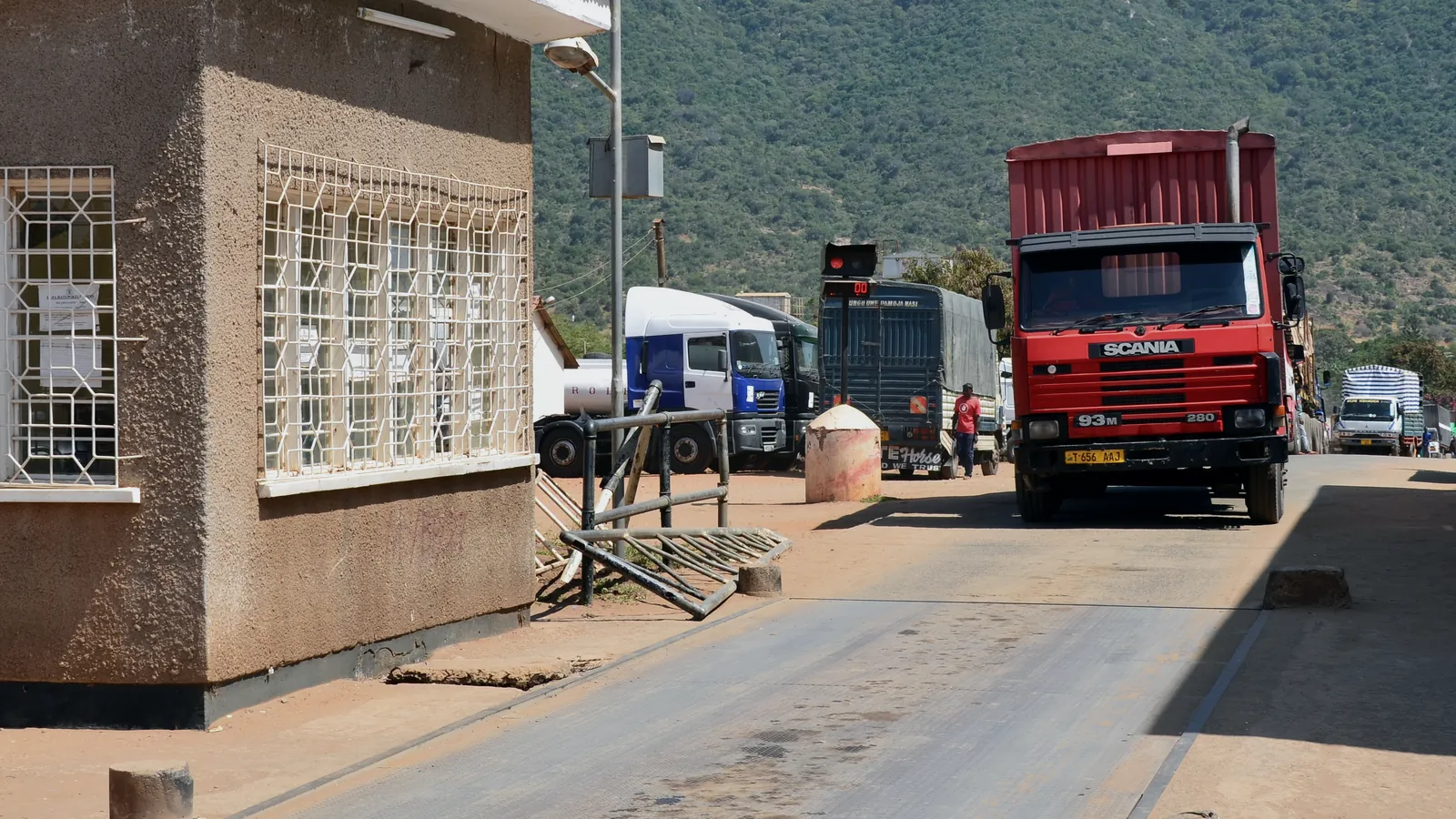
A weighbridge (Indonesian: jembatan timbang) is a large platform scale that weighs a whole truck at once: the loaded vehicle gives the gross weight, the empty vehicle gives the tare weight, and the difference is the net weight of the cargo printed on the weigh ticket.
The idea is simple, and the detail is where trust is won or lost. Every weighbridge system answers the same questions: which vehicle is on the deck, for which order, how heavy is it, who saw it, and where does the number go afterwards. This guide follows that path from the load cell to the ERP, then explains how tera ulang keeps the scale legally usable.
At a fuel or LPG depot, the weighbridge sits next to the gate and the loading area. It belongs to the same flow as a terminal automation system, so weighing data and loading data should never live in separate notebooks.
Scope
Two meanings of jembatan timbang
The term points to two different installations, and search results mix them. Knowing which one you mean avoids a lot of confusion.
- The company weighbridge stands at a gate and weighs cargo for sales, receiving, stock or transport billing. It is a weighing instrument used in transactions, so legal metrology applies.
- The roadside weighing station is run by the transport authority to check vehicle load on public roads. Its rules sit in Permenhub 18/2021 on freight load supervision and vehicle weighing on roads, which replaced Permenhub 134/2015.
The hardware is similar: a deck, load cells and an indicator. The purpose, the operator and the legal basis differ. This guide covers the company weighbridge, the one behind the gate of a terminal, depot, palm oil mill or factory.
Components
The parts of a weighbridge system
A weighbridge system is a short chain from steel to software, and each link can introduce error.
The deck is the steel or concrete platform the truck drives onto. Load cells sit under it, usually at the corners and along the sides. A junction box collects their signals, and a weighing indicator, also called a weighing controller, converts the sum into a weight and decides when the value is stable enough to record. Identification, a camera and a barrier gate turn the weight into a transaction. Weighing software ties everything to an order and sends the ticket onward.
The platform the truck stands on, supported by the load cells.
Hover, focus or tap a step to read its note.Measurement
How a load cell turns weight into a number
A load cell is a metal block or beam that bends very slightly under load, and strain gauges bonded to it change their electrical resistance as it bends.
The gauges are wired as a bridge circuit. When the load changes, the bridge gives out a small voltage that is proportional to the load and to the supply voltage, usually expressed in millivolts per volt. The indicator reads that signal, applies calibration, and shows weight.
Digital load cells put the conversion inside the cell and send readings over a serial link. Analog cells are simpler, but every cable, joint and junction box adds possible error. Load cells for legal use are normally approved to OIML R 60.
- Maximum capacity (Max)
- The largest load the instrument is approved to weigh; marked on the data plate.
- Verification scale interval (e)
- For road or rail weighbridges, OIML R 76-1 advises not below 10 kg.
- Number of intervals (n)
- Outdoors, going above 3 000 takes special measures (OIML R 76-1).
- Accuracy class
- I, II, III or IIII, marked on the plate.
- Platform length
- Long enough for the longest vehicle to stand fully on the deck.
- Seals and marks
- Sealed indicator and junction box, plus the tera mark with its year code.
Procedure
Weigh in, weigh out: from gross and tare to net
Net weight is the difference between two weighings of the same truck. For goods coming into a site the truck is weighed loaded first and empty second. For goods leaving, such as a dispatch, the order is reversed.
Two weighings are needed because the scale cannot see the cargo on its own; it only sees truck plus cargo. Everything that stays with the truck, including fuel in the tank, the driver, spare tyres and tools, cancels out only if it is the same at both weighings. Some sites store the tare of regular vehicles to save a pass, which works until a tank is refilled or a body is changed, so stored tares need an expiry.
Identify the vehicle and order
RFID card, barcode or plate check links the truck to an open order before it reaches the deck.
First weighing
The truck stops fully on the deck; the indicator reports a stable weight and the camera records it.
Load or unload
The truck goes to the unloading point, or to the filling shed for a dispatch.
Second weighing
The truck returns to the same weighbridge, so one scale produces both numbers.
Validate and print the ticket
Software checks the pair, calculates net weight, prints the ticket and passes the result onward.
Evidence
What a weigh ticket contains
A weigh ticket is the record that two parties accept as the weight of a load.
We did not find a single national template for company weighbridges, so the layout is usually set by contract or by the site's procedure. A useful ticket answers who, what, when and how much. It shows the ticket number, date and time of both weighings, the weighbridge, the vehicle number, the order or delivery note, the material, gross, tare and net weight with the unit, and the user who handled it. A reprint should say so on its face.
WEIGH TICKET (example layout, dummy values)
Ticket no.     : WT-000123          Weighbridge : WB-01
Vehicle        : D 1234 XX          Driver      : (name)
Order / DO     : DO-0456789         Material    : (product)

Weigh-in       : 2026-11-13 07:42   Gross : 38 460 kg
Weigh-out      : 2026-11-13 08:31   Tare  : 14 220 kg
                                    Net   : 24 240 kg   (gross - tare)

User           : gate-user-03       Photos : IN-0001, OUT-0001
Print : ORIGINAL Scale tera valid until: (year code)Verification
Tera ulang: why the ticket needs a legal scale
A weighbridge used for transactions is a legal-metrology instrument, so its readings count only while its tera mark is valid.
The Metrologi Legal Law (UU 2/1981) defines tera as marking a measuring, weighing or related instrument as valid after testing, before it is used. Tera ulang repeats that marking periodically. Permendag 24/2024, in force since October 2024, now governs how tera and tera ulang are carried out, and it replaced the 2018 rules (Permendag 67, 68 and 125). The work is done by authorised officers of the Direktorat Metrologi, a UPT, or the regional Unit Metrologi Legal (UML) for the area.
A weighbridge cannot be carried to an office, so the officers normally come to site with standard weights. Re-verification is also triggered by events: an expired mark, a broken seal wire, a repair that affects the readings, or readings that drift from the technical requirement. Check the current list of instruments and the interval with your UML, because it sits in the regulation's annex. The difference between tera, tera ulang and calibration is explained in legal metrology in Indonesia.
Controls
Preventing cheating at the weighbridge
Most weighbridge disputes come from the process around the scale, not from a bad load cell.
The table lists the usual ways a weighing goes wrong and the control that closes each gap. None of the controls replaces the others, and a camera without a rule only records the problem.
| Criterion | What goes wrong | Control that closes the gap |
|---|---|---|
| Wheels partly off the deck | Part of the weight never reaches the load cells. | Deck long enough, position sensors or light curtains, and a software rule that blocks the weighing when a sensor is blocked. |
| Wrong or edited tare | Net weight shifts by the tare error. | Compare with the tare history of the vehicle, flag a large change, and expire stored tares. |
| Wrong vehicle or swapped plate | The weight is booked against another order. | RFID card tied to the vehicle and order, plate photo at each weighing, and supervisor approval for manual entry. |
| Changed indicator settings | Readings differ from the calibrated state. | Sealed indicator and junction box, tera seal wire, and an audit log of every parameter change. |
| Edited or reprinted tickets | Paper no longer matches the record. | Tickets generated only from the server record, edits that need a reason and a user, and reprints marked as copies. |
Software
Weighbridge software and ERP integration
Weighbridge software connects a number on a display to a business transaction.
Its core jobs are identifying the vehicle, reading the indicator, pairing weigh-in with weigh-out, validating the result against the order, keeping photographic evidence and printing the ticket. Larger sites run several weighbridges from one screen. The result then goes to the ERP or TAS: order number, vehicle, gross, tare, net, time stamps and ticket number. Posting per transaction avoids the end-of-shift typing that hides errors.
INTEGRA Weighing is Citia's product for this chain; its page lists RFID or barcode identification, cameras, barrier gates, validation and tickets, and links to TAS, SAP or another ERP. When no operator sits at the weighbridge, the same chain runs with stricter controls, covered in unmanned weighbridges and ERP integration. See also INTEGRA Weighing and INTEGRA Access for the gate side.
Field
Field notes: a weighbridge link that kept dropping
The Citia long-term service agreement (LTSA) for the TAS at Pertamina IT Panjang's LPG depot covers the weighing equipment in the TAS, including a Weighing House PC. Communication between the weighbridge controller and that PC was often lost, which disrupted weighing.
The team checked the path in order: the physical connection, the communication card, the cable and the device configuration, and wrote down the result of each check. Tidying and labelling the server rack wiring made later tracing faster. The lesson in the project report is that communication paths in a weighing system need regular maintenance and monitoring, not only attention after a failure. Details are on the LTSA for LPG Panjang page.
Glossary
- Gross weight (bruto)
- The weight of the vehicle with its cargo.
- Tare weight (tara)
- The weight of the empty vehicle.
- Net weight (neto)
- The weight of the cargo alone: gross minus tare.
- Load cell
- A sensor that gives an electrical signal proportional to the load on it.
- Weighing indicator
- The device that converts load cell signals to weight and shows or sends the stable value.
- Junction box
- The box that adds the signals of several load cells into one.
- Verification scale interval (e)
- The step used to classify the scale and judge its error.
- Tera and tera ulang
- Legal marking of an instrument after testing, and its periodic repeat.
- UML
- Unit Metrologi Legal, the regional unit that performs tera and tera ulang.
Frequently asked questions
What is the purpose of a weighbridge?
A weighbridge measures the weight of a vehicle and its cargo so that the load can be bought, sold, received or billed. It also supports stock records, transport billing and safety limits on vehicle load. The result is stated on a weigh ticket that both parties can check.
How does a weighbridge work?
A weighbridge works by supporting a steel deck on load cells that convert load into electrical signals. A junction box sums the signals, an indicator turns them into a stable weight, and software records the weight against a vehicle and an order. The truck is weighed twice and the difference is the net weight.
How does a load cell work?
A load cell works by letting a metal element flex slightly under load while strain gauges on it change resistance. The gauges form a bridge circuit that outputs a small voltage proportional to the load. The indicator reads this voltage and applies calibration to show weight.
What should a weighbridge ticket contain?
A good weighbridge ticket carries the ticket number, both weighing times, the weighbridge, the vehicle number, the order, the material, and gross, tare and net weight with units. We found no single national template for company weighbridges, so the layout is agreed by contract or site procedure. Reprints should be marked as copies.
Does a weighbridge need tera ulang?
A weighbridge used for transactions is treated as a legal-metrology instrument and needs a valid tera mark, renewed by tera ulang. Permendag 24/2024 sets the process, and the instrument list and interval sit in its annex. Confirm them with your regional Unit Metrologi Legal before the mark expires.
How is cheating at a weighbridge prevented?
Cheating is prevented by controlling the process around the scale: position sensors so the truck stands fully on the deck, camera evidence, RFID identification, tare history, sealed indicators and an audit log. Each control closes one specific gap, so they work together.
What does a weighbridge operator do?
A weighbridge operator checks the vehicle and order, supervises the weighing, resolves exceptions and hands over the ticket. The operator should not type weights by hand. Where a site runs without an operator, the identification and checks are automated instead.
Can weighbridge data be sent to SAP?
Weighbridge data can be sent to SAP or another ERP when the software exposes an interface for the transaction. The usual payload is the order, vehicle, gross, tare, net, times and ticket number, posted per transaction. The interface needs the same order numbers on both sides.
Sources and further reading
- OIML R 76-1 (2006): Non-automatic weighing instruments, Part 1 (opens in a new tab)
- OIML R 60: Metrological regulation for load cells (Edition 2000, erratum) (opens in a new tab)
- Undang-Undang Nomor 2 Tahun 1981 tentang Metrologi Legal (opens in a new tab)
- Peraturan Menteri Perdagangan Nomor 24 Tahun 2024 tentang Kegiatan Tera dan Tera Ulang (opens in a new tab)
- Peraturan Menteri Perhubungan Nomor 18 Tahun 2021 tentang Pengawasan Muatan Angkutan Barang dan Penyelenggaraan Penimbangan Kendaraan Bermotor di Jalan (opens in a new tab)
- INTEGRA Weighing (opens in a new tab)
- LTSA for LPG Panjang (opens in a new tab)
- Cover photo by Jan Hoffmann, CC BY-SA 3.0 (cropped and colour graded) (opens in a new tab)
Next step
Prepare the technical discussion for your facility.
Bring the equipment list, diagrams and symptoms you have. The Citia team helps map the next step.
Related products and solutions
- KnowledgeIntegrating TAS and TMS with SAP: what data flows and how to handle failuresA TAS and TMS link to SAP carries orders, filling results and tank stock. See the data per transaction and how queues, retries and reconciliation keep it correct when the connection fails.
- ProductINTEGRA WeighingPairs weigh-in and weigh-out for each truck and issues the weigh ticket.
- ProductINTEGRA AccessControls who and which vehicles may enter each area, and keeps a full entry and exit record.
- KnowledgeUnmanned weighbridges and ERP integrationAn unmanned weighbridge identifies, positions, weighs and issues the ticket without an operator, then posts to the ERP. Equipment, controls and rollout.
- KnowledgeLegal metrology in Indonesia: verification (tera), re-verification and calibrationTera marks an instrument as valid for use, tera ulang repeats it periodically, and calibration gives no legal status. The rules and the process in Indonesia.
- ProjectLTSA for LPG PanjangThe long-term service agreement (LTSA) for the TAS at LPG Panjang keeps the Terminal Automation System (TAS) reliable and available. The TAS supports LPG receipt, storage and distribution.
- KnowledgeTerminal Automation System (TAS): what it is, its components and how it worksA terminal automation system (TAS) runs fuel and LPG truck loading, from order and gate-in to metering, delivery documents and gate-out.