
Industrial IoT
Industrial IoT gateways and telemetry: getting remote-site data to a dashboard
An industrial IoT gateway reads field devices, buffers data when the network drops and sends it to a server. How telemetry differs from SCADA and how to choose a gateway.
- Topic
- Industrial IoT
- Updated
- 13 November 2026
- Reading time
- 6 min
- Sections
- 7
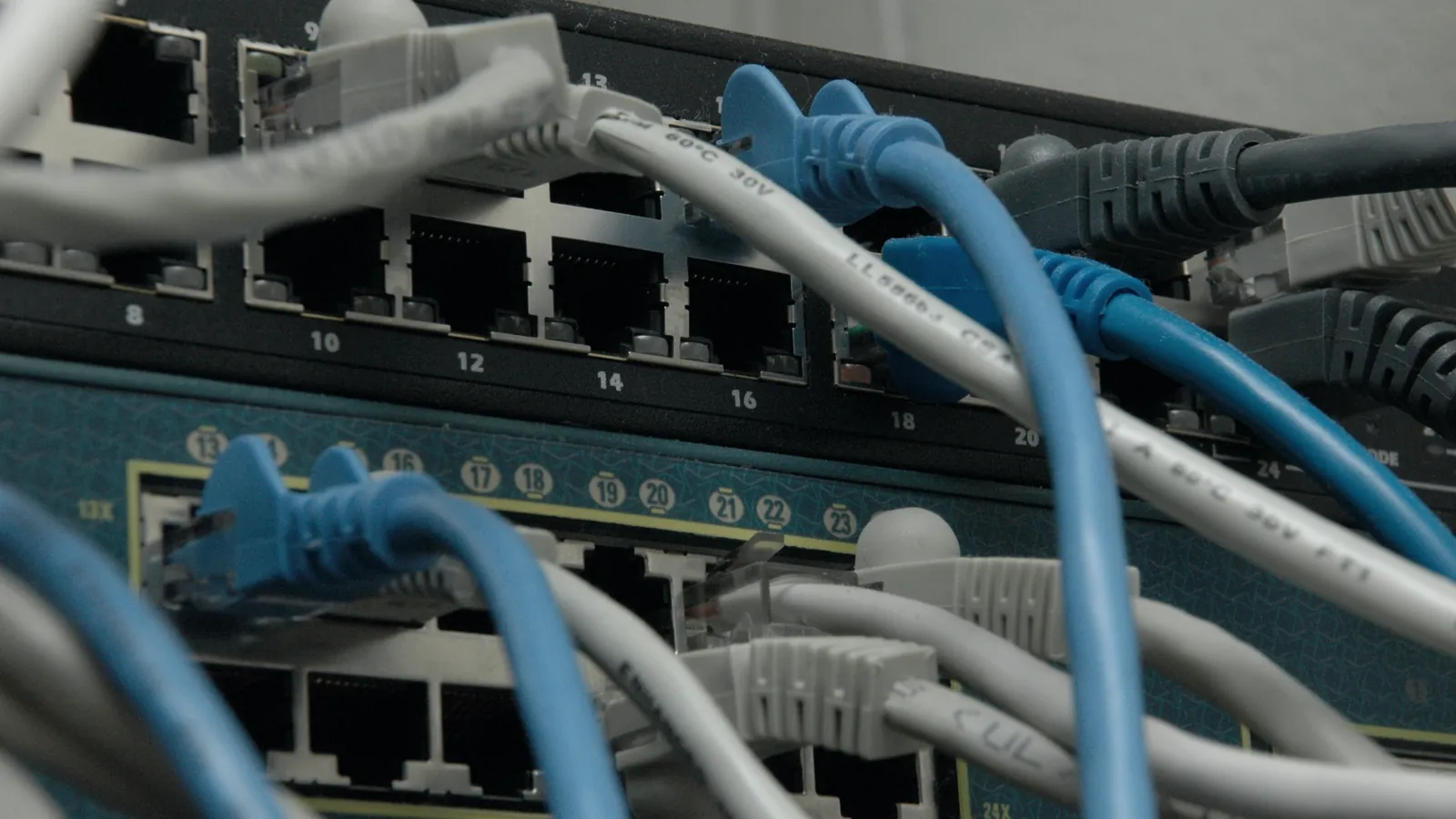
An industrial IoT gateway is a device that reads data from sensors, PLCs or meters through field protocols, stores it temporarily when the network drops, and then sends it to a server or the cloud over a cellular or Ethernet network.
Telemetry is the wider practice of measuring at one place and seeing the result somewhere else. Think of river levels at a mine jetty, pressure along a fuel pipeline, or temperature inside an electrical panel. These points are often far from any control room, and running cable to each one costs more than the measurement is worth. A gateway with a cellular link closes that gap.
The technology is mature, and the hard parts sit at the edges of the system. The sensor must be mounted where it reads the real process. The power supply must survive the rainy season. The data path must keep history intact when the signal comes and goes.
Architecture
From sensor to dashboard: the telemetry chain
A telemetry system is a chain of five links, and the data is only as reliable as the weakest one.
At the field end, sensors deliver 4-20 mA, digital inputs or Modbus. The gateway polls them on a set interval, converts raw values into engineering units, adds a timestamp and checks alarm limits. It then sends the data over cellular, radio or Ethernet, often with MQTT, to a server that stores history and drives the dashboard and notifications.
Every link adds a setting someone must own: the sensor range, the polling interval, the alarm limits, the SIM card and data plan, the server account. Write them down in one place per site. When a reading looks wrong, that sheet tells you which link to check first.
Choose the polling interval from the process, not from habit. A river level that changes over hours does not need a reading every second, while a pipeline pressure used for leak alarms may need fast sampling at the gateway with only changes and alarms sent upward. Faster intervals cost data volume and, at solar-powered sites, battery capacity.
Level, pressure, temperature or humidity; 4-20 mA, digital or Modbus.
Hover, focus or tap a step to read its note.Comparison
Telemetry vs SCADA: what is the difference
Telemetry tells you what is happening far away; SCADA also lets you act on it.
A telemetry system mainly measures, records and alarms. Data may arrive every few minutes, and nobody expects to start a pump from the dashboard. SCADA, supervisory control and data acquisition, runs closer to the process: operators issue commands, see responses within seconds, and the system talks to PLCs and RTUs that carry interlocks.
The line between the two blurs when a remote site needs control, for example a pump at a river intake. Even then, keep the control logic and safety interlocks in the local PLC or RTU. The remote link should send setpoints and commands that the local controller checks, never replace the controller.
| Criterion | Telemetry | SCADA |
|---|---|---|
| Main purpose | Remote measurement, history and alarms | Supervisory control and data acquisition |
| Update rate | Seconds to minutes, set per site | Seconds or faster |
| Network | Cellular, radio or internet | Plant LAN, fibre or dedicated links |
| Field equipment | Sensors and an IoT gateway | PLCs, RTUs and HMIs |
| Control | Usually none, or limited and checked locally | Operator commands with interlocks |
Resilience
What happens when the cellular signal drops
A remote link will drop, so the design question is what the gateway does in the meantime.
A store-and-forward gateway keeps reading the sensors, saves each value with the time it was read, and sends the backlog in order when the link returns. The dashboard then fills the gap instead of drawing a flat line. Size the local memory for the longest outage you expect, at your polling interval.
Alarms need their own plan. If a high level must reach someone during an outage, add a local path: a siren, a relay to a local panel, or SMS through a second modem. With MQTT 5.0, a gateway can register a Will message so the broker announces when the gateway disappears, which turns silence into an alarm of its own.
Local buffer
Stores readings during outages.
Source timestamps
Time of reading, not time of arrival.
Local alarm path
Siren, relay or SMS when the link is down.
Offline detection
MQTT Will message or heartbeat check.
Selection
Choosing an industrial IoT gateway
Pick a gateway by the site it will live in, not by the longest feature list.
Start with the field side: which protocols and signals must it read, and how many points. Then the network side: which carriers cover the site, whether a private APN or VPN is required, and how the data reaches the server. Then the environment: supply voltage, temperature, dust and water, vibration, and hazardous-area classification if the gateway sits near fuel.
Security belongs on the same list. IEC 62443-4-2:2019 sets technical security requirements for industrial automation components, grouped under seven foundational requirements such as identification and authentication control, system integrity and data confidentiality. Ask suppliers which of these the gateway supports, and how firmware updates are delivered and verified.
Remote management decides how often someone must drive to the site. A gateway that reports its own health, signal strength and supply voltage, and accepts configuration changes over the secure link, saves trips. Keep a backup of every gateway configuration on the server, so a failed unit can be replaced and restored in one visit.
- Field protocols
- Modbus RTU/TCP, 4-20 mA and digital inputs, others the site needs
- Upstream
- MQTT or HTTPS over TLS; OPC UA where a site system needs it
- Buffer
- Enough memory for the longest expected outage
- Power
- DC input matching solar, battery or panel supply
- Enclosure
- IP rating and temperature range for the actual site
- Security
- Authentication, encrypted transport, signed firmware (IEC 62443-4-2)
Site design
Power, enclosure and wireless sensors
At a remote site, the gateway is usually the easy part; keeping it powered and dry is harder.
Without grid power, a solar panel and battery must carry the load through cloudy days and nights. Lower the energy budget by choosing the reading interval carefully, letting the modem sleep between transmissions, and sizing the battery with margin. The enclosure must keep out rain and insects, and cable entries need glands that stay sealed.
Wireless sensors remove signal cabling where wires are hard to run, for example on busbars inside live switchgear. CATALYST CT-WTS reads temperature at the asset and sends it into the CATALYST data path. Wireless works well for monitoring when the radio path is surveyed first; keep safety functions on wired, certified loops.
Lightning is the other remote-site risk. Antenna masts, long sensor cables and solar frames all collect surges. Bond them to a proper earth and fit surge protection on signal and communication lines. The ATG gateway replacement at Jambi recorded the lesson plainly: install line protection from the start in areas prone to lightning.
Security
Securing gateways and cloud links
A gateway connected to the internet is a door into the plant network, so lock it like one.
Make every connection outbound from the gateway to a known server, so no port on the site needs to be open to the internet. Use TLS for the transport; IANA lists port 8883 for secure MQTT. Give each gateway its own credentials or certificate, so one lost device does not expose the rest. Keep the gateway on its own network zone, separated from PLC and safety networks by a firewall.
Plan the lifecycle as well: who changes passwords, who installs firmware updates, and what happens to the data and credentials when a gateway is replaced or removed.
Outbound only
The gateway connects out to the server; no inbound ports open at the site.
Encrypt the transport
TLS for MQTT or HTTPS, with certificates checked on both sides.
One identity per device
Unique credentials or certificates, revoked when a device is retired.
Separate the zones
Firewall between the gateway, the PLC network and safety systems.
Maintain it
Scheduled firmware updates, password changes and backup of the configuration.
In the field
In the field: telemetry at Citia sites
Citia projects show that remote monitoring succeeds or fails on the site survey and on testing the whole chain.
For PT Adaro Energy in Barito Selatan, Central Kalimantan, Citia installed a river water level monitoring system in 2022 around a VEGAPULS C30 radar sensor. The site is remote, with limited access and no grid power, so a solar panel and battery supply the devices. The project record credits the field survey, the sensor mounting position and verification before commissioning for the result.
CATALYST Telemetering applies the same pattern to river level, pipeline and tank pressure, and panel temperature and humidity, with power, connectivity and reading interval designed per site. On the Balongan to Plumpang pipeline, restoring PressMon communication meant replacing fibre optic converters and then testing real-time data, pump status, alarms and the shutdown function, not only the network link.
The same thinking extends to terminal software. INTEGRA CTP, which is still in development, places gateways and edge software at each site to collect device data and keep local work going, with buffering when the connection drops. How each site behaves during an outage is assessed per implementation rather than assumed.
Terms to know
- Telemetry
- Measuring at a remote point and transmitting the result to another place for monitoring.
- IoT gateway
- A device that reads field devices and forwards their data to a server or cloud platform.
- Edge computing
- Processing data close to where it is measured, such as scaling, filtering and alarm checks in the gateway.
- Store and forward
- Saving readings locally during an outage and sending them in order when the link returns.
- MQTT
- A lightweight publish/subscribe protocol in which devices send messages to a broker.
- SCADA
- Supervisory control and data acquisition: monitoring plus operator control of a process.
- Polling interval
- How often the gateway reads each sensor; it drives data volume and power use.
- IP rating
- The code that states how well an enclosure keeps out dust and water.
Frequently asked questions
What is the difference between telemetry and SCADA?
Telemetry mainly measures, records and alarms from remote sites, while SCADA also lets operators control the process. SCADA usually runs on plant networks with fast updates and PLC interlocks; telemetry often runs over cellular links with updates every few seconds to minutes.
What happens to my data when the cellular signal is lost?
With a store-and-forward gateway, data is kept locally with its reading time and sent when the signal returns. Without buffering, readings taken during the outage are lost. Check the buffer size against the longest outage you expect at your polling interval.
Are wireless sensors reliable in industrial areas?
Wireless sensors are reliable for monitoring when the radio path is surveyed and the batteries are maintained. Metal structures, tanks and switchgear can block signals, so test coverage at the real mounting points. Keep safety functions on wired, certified instrument loops.
What is edge computing in IoT?
Edge computing in IoT means processing data in or near the gateway instead of sending every raw value to the cloud. Typical edge tasks are scaling, filtering, alarm checks and buffering, which cut data volume and keep local functions running when the link drops.
What is an IoT gateway used for?
An IoT gateway is used to connect field devices that speak industrial protocols to servers and cloud platforms. It reads sensors, PLCs or meters, converts the data, and forwards it securely over cellular or Ethernet networks.
Can an IoT gateway control equipment remotely?
An IoT gateway can pass remote commands, but control logic and safety interlocks should stay in a local PLC or RTU. The remote link sends setpoints or requests that the local controller checks. That way a lost or delayed message cannot put the process in an unsafe state.
Sources and further reading
- IEC 62443-4-2:2019 Security for industrial automation and control systems, Part 4-2: Technical security requirements for IACS components (opens in a new tab)
- ISA/IEC 62443 Series of Standards (opens in a new tab)
- MQTT Version 5.0, OASIS Standard (opens in a new tab)
- Service Name and Transport Protocol Port Number Registry: port 8883 (secure-mqtt) (opens in a new tab)
- CATALYST Telemetering (opens in a new tab)
- Adaro: water level monitoring system (opens in a new tab)
- Cover photo by ShakataGaNai, CC BY-SA 3.0 (cropped and colour graded) (opens in a new tab)
Next step
Prepare the technical discussion for your facility.
Bring the equipment list, diagrams and symptoms you have. The Citia team helps map the next step.
Related products and solutions
- KnowledgeOPC UA vs Modbus vs MQTT: which protocol for which jobOPC UA carries values with structure and built-in security, Modbus carries raw registers, and MQTT publishes data to a broker. When to use each one.
- KnowledgeRiver and jetty water level monitoring: sensors, telemetry and alarmsAn AWLR measures water level automatically and sends it by telemetry. This guide covers sensor choice, mounting, remote power and alarms for rivers and jetties.
- KnowledgeContinuous busbar and panel temperature monitoringSensors on busbar joints and panel hot spots show overheating between thermography rounds. This guide covers placement, alarm limits and the link to SCADA.
- ProductCATALYST TelemeteringBrings level, pressure and panel readings from remote sites to one dashboard.
- ProductINTEGRA CTPTerminal automation run from the cloud, with gateways and edge software at each site.
- ProductCATALYST CT-WTSA wireless temperature sensor for reading industrial assets without new signal cabling.
- ProjectAdaro: water level monitoring systemCitia installed a VEGAPULS C30 radar river water level monitoring system with solar power at the PT Adaro Energy operational area in Barito Selatan in 2022.
- ProjectBalongan PressMon communication restorationPressMon communications-network and panel maintenance
- NewsWater Level Telemetering SystemDescribes sensor-based water level data collection, level-change alerts and data access through web and mobile platforms.